
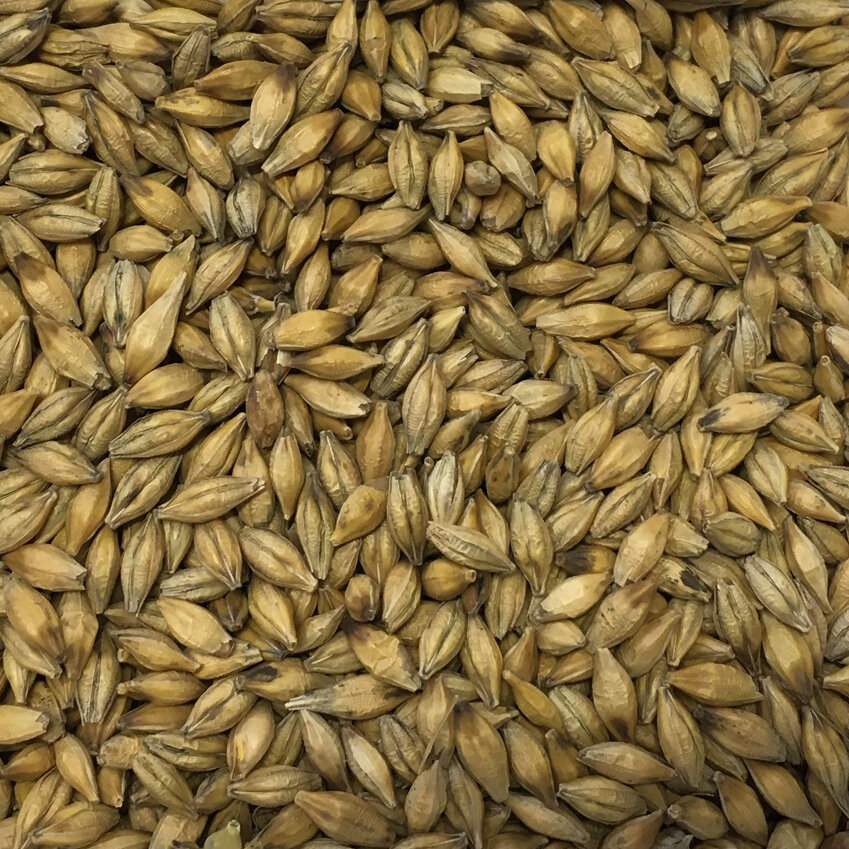
Hordeum vulgare var. distichon
Order: Sweet grasses (Poales)
Family: Sweet grasses (Poaceae)
Subfamily: Pooideae
Tribus: Triticeae
Genus: Barley (Hordeum)
Morphological characteristics of barley:
Growth habit:
An annual, tillering grass with erect, usually hollow culms divided by nodes into several internodes.
Winter barley is usually sown in autumn, overwinters, and has a variety-dependent vernalisation requirement. Tillering begins before winter and may continue in spring.
Leaves:
Leaf blades are flat, linear, parallel-veined, and usually rough. The leaf sheaths are open, although they encircle the culm.
Leaf auricles (auriculae):
The long, sickle-shaped, hairless auricles are a particularly important identifying feature of barley.
Ligule (ligula):
The ligule is short and membranous, with a finely toothed to irregularly fringed upper margin.
Spike:
A terminal spike with groups of three single-flowered spikelets at each node of the rachis.
The central spikelet is sessile, while the two lateral spikelets are shortly stalked. Each spikelet has two narrow glumes.
- Two-rowed barley:
Only the central spikelet of each group of three is fertile and produces a grain.
The two lateral spikelets are sterile and reduced to varying degrees.
This results in two rows of grains.
The ear is relatively flat and regularly arranged.
- Multi-rowed barley:
All three spikelets in each group are fertile, resulting in six rows of grains.
Depending on the arrangement of the grains, the ear appears regularly six-rowed or apparently four-rowed.
The ear consequently appears broader and more robust.
Awns:
The awns arise from the lemmas and are usually considerably longer than the ear. Short-awned, awnless, and hooded forms also occur.
Grain (caryopsis):
Elongated to oblong-oval, often yellowish to yellowish-brown.
In hulled barley, the lemma and palea are firmly fused to the fruit wall (pericarp) of the caryopsis. In hulless barley, this firm attachment is absent, and the husks separate during threshing.
Hordeum vulgare var. hexastichon
Order: Sweet grasses (Poales)
Family: Sweet grasses (Poaceae)
Subfamily: Pooideae
Tribus: Triticeae
Genus: Barley (Hordeum)
Morphological characteristics of barley:
Growth habit:
An annual, tillering grass with erect, usually hollow culms divided by nodes into several internodes.
Winter barley is usually sown in autumn, overwinters, and has a variety-dependent vernalisation requirement. Tillering begins before winter and may continue in spring.
Leaves:
Leaf blades are flat, linear, parallel-veined, and usually rough. The leaf sheaths are open, although they encircle the culm.
Leaf auricles (auriculae):
The long, sickle-shaped, hairless auricles are a particularly important identifying feature of barley.
Ligule (ligula):
The ligule is short and membranous, with a finely toothed to irregularly fringed upper margin.
Spike:
A terminal spike with groups of three single-flowered spikelets at each node of the rachis.
The central spikelet is sessile, while the two lateral spikelets are shortly stalked. Each spikelet has two narrow glumes.
- Two-rowed barley:
Only the central spikelet of each group of three is fertile and produces a grain.
The two lateral spikelets are sterile and reduced to varying degrees.
This results in two rows of grains.
The ear is relatively flat and regularly arranged.
- Multi-rowed barley:
All three spikelets in each group are fertile, resulting in six rows of grains.
Depending on the arrangement of the grains, the ear appears regularly six-rowed or apparently four-rowed.
The ear consequently appears broader and more robust.
Awns:
The awns arise from the lemmas and are usually considerably longer than the ear. Short-awned, awnless, and hooded forms also occur.
Grain (caryopsis):
Elongated to oblong-oval, often yellowish to yellowish-brown.
In hulled barley, the lemma and palea are firmly fused to the fruit wall (pericarp) of the caryopsis. In hulless barley, this firm attachment is absent, and the husks separate during threshing.

Avena sativa
Order: Sweet grasses (Poales)
Family: Sweet grasses (Poaceae)
Subfamily: (Pooideae)
Tribus: Aveneae
Genus: Oats (Avena)
Morphological characteristics of Oat:
Growth habit:
Annual, tuft-forming grass with an erect, usually hollow culm. The culm is divided into several nodes and internodes.
Winter oats are sown in autumn and have been selected for overwintering.
They have greater winter hardiness than spring oats. Nevertheless, they may suffer winterkill during severe frosts.
Leaves:
Leaf blades are flat, linear to lanceolate, and parallel-veined. The leaf surface is often rough. The leaf sheaths enclose the culm
Auricles:
Auricles are absent.
Ligule:
The ligule is well developed, membranous, and relatively large. Its upper margin may be smooth, finely toothed, or irregularly incised
Inflorescence (panicle)
Terminal, loose and spreading panicle with branched lateral axes. The spikelets are borne individually on the branches of the panicle and are often nodding
This clearly distinguishes oat from cereal species with compact spikes, such as barley and wheat
Spikelets:
Spikelets are multi-flowered and enclosed by two large glumes. The individual florets possess a lemma and palea
The spikelets are comparatively large and loosely structured
Awns:
Awns may be present and arise particularly from the lemmas. They are often geniculate and twisted
Their development can vary depending on the cultivar and may be largely absent in certain forms
Grain (caryopsis):
The caryopsis is elongated to spindle-shaped and usually yellowish to yellowish-white.
In hulled oats, the caryopsis is tightly enclosed by the lemma and palea and remains hulled during conventional threshing.
In naked oats, the hulls largely separate from the grain during threshing.

Secale cereale
Order: Sweet grasses (Poales)
Family: Sweet grasses (Poaceae)
Subfamily: Pooideae
Tribus: Triticeae
Genus: Rye (Secale)
Morphological characteristics of rye:
Growth habit:
A winter annual, tuft-forming grass with an upright, usually hollow culm. The culm is divided into several nodes and internodes.
Sown in autumn, winter rye normally requires prolonged exposure to cold. Vegetative growth and tillering take place in autumn.
Leaves:
Leaf blades are flat, linear, parallel-veined, and usually rough. The leaf sheaths enclose the culm
Leaf auricles (auriculae):
Short, narrow, and sickle-shaped, usually glabrous or only sparsely ciliate
They only partially clasp the culm and are less strongly developed than those of barley
Ligule:
Short to medium-sized, membranous, and usually smooth to finely toothed. It is located at the junction between the leaf sheath and leaf blade
Spike:
A terminal, slender, elongated spike with a well-developed rachis. Each node of the rachis bears a single spikelet.
The spike is elongated and comparatively slender.
Spikelet:
The spikelets are predominantly two-flowered and each is enclosed by two glumes
Awns:
The lemmas bear prominent awns whose length varies among cultivars.
These give the rye spike its characteristic bristly appearance.
Grain (caryopsis):
Elongated to oblong-oval, often greyish-green to yellowish-brown in colour
The caryopsis has a distinct ventral crease
At maturity and during threshing, the glumes and other floral structures are largely separated

Triticosecale
Order: Sweet grasses (Poales)
Family: Sweet grasses (Poaceae)
Subfamily: Pooideae
Tribus: Triticeae
Genus: Triticale
Morphological Characteristics of Triticale:
Scientific note:
Triticale is a group of cereal crops resulting from crosses between wheat (Triticum spp.) and rye (Secale spp.).
Because of their hybrid origin and the different breeding types, triticale plants show comparatively high morphological variability.
Individual traits—particularly the development of awns, the spike and the leaf organs—should therefore not be regarded as absolutely species-specific.
Growth habit:
A winter-annual, tuft-forming grass with an erect, usually hollow culm. The culm is divided into several nodes and internodes.
In its growth habit and culm structure, triticale may exhibit traits intermediate between those of wheat and rye.
Winter triticale is usually sown in autumn, overwinters in the vegetative stage and generally requires an extended period of cold exposure.
Leaves:
Leaf blades are flat, linear to lanceolate, and parallel-veined. The leaf surface is often rough. The leaf sheaths enclose the culm.
Leaf auricles (auriculae):
Well developed, usually sickle-shaped, and mostly glabrous to sparsely ciliate. They partially to largely clasp the culm.
The development of the leaf auricles may vary depending on the genotype.
Ligule:
Short to medium-sized, membranous, and usually smooth to finely toothed. Its shape and development may vary among triticale genotypes.
Spike:
A terminal, elongated spike, ranging from compact to moderately lax, with a clearly developed rachis.
The shape and density of the spike may vary depending on the genotype and may combine traits of both wheat and rye.
Spikelets:
The spikelets are borne singly at the nodes of the rachis.
They are multi-flowered and each is enclosed by two glumes.
Awns:
Awns may be present, with their length and development varying depending on the genotype.
In awned forms, they are clearly visible and may extend beyond the spikelets.
Their characteristics may resemble those of either wheat or rye.
Grain (caryopsis):
Oblong to elongated-oval, usually yellowish to yellowish-brown. Its shape, size and colour may vary depending on the genotype.
The caryopsis may show morphological traits resembling both wheat and rye.
At maturity, the grain is enclosed by the glumes but is generally released during threshing.

Triticum aestivum
Order: Sweet grasses (Poales)
Family: Sweet grasses (Poaceae)
Subfamily: Pooideae
Tribus: Triticeae
Genus: Wheat (Triticum)
Morphological characteristics of wheat:
Growth habit:
An annual, tuft-forming grass that overwinters when sown in autumn. The culms grow upright and are divided into nodes and internodes.
The internodes are usually hollow, while the nodes are solid. Tillering produces lateral shoots at the base of the plant.
Winter wheat is usually sown in autumn, overwinters, and requires a cultivar-dependent period of cold exposure (vernalisation) for reproductive development.
Leaves:
The leaves are arranged alternately in two ranks. The leaf blades are flat, linear, and parallel-veined. The leaf sheaths surround the culm.
Auricles:
Usually short, sickle-shaped auricles occur at the junction between the leaf sheath and the leaf blade, partially clasping the culm. Their margins are typically fringed with hairs.
Important vegetative field identification feature: hairy-margined auricles, particularly in combination with the short, membranous ligule.
Ligule:
Membranous and short, usually only a few millimetres long; the upper margin is generally truncate to finely toothed.
Spike:
A terminal spike with an unbranched rachis.
A single, multi-flowered spikelet is attached at each rachis node; the spikelets are arranged alternately in two ranks.
Each spikelet is enclosed at its base by two glumes.
Awns:
Depending on the cultivar, the spike may be awnless, short-awned, or long-awned. The awns arise from the lemmas and may reach several centimetres in length.
Grain (caryopsis):
The grain is oval to elongated-ellipsoidal. It has a distinct longitudinal crease on the ventral side and a tuft of hairs (“brush”) at the end opposite the embryo. Depending on the cultivar, its colour ranges from whitish or pale yellow to reddish-brown.
In common wheat, the grains are released from the enclosing husks during threshing.
Triticum aestivum
Order: Sweet grasses (Poales)
Family: Sweet grasses (Poaceae)
Subfamily: Pooideae
Tribus: Triticeae
Genus: Wheat (Triticum)
Morphological characteristics of wheat:
Morphological characteristics of wheat:
Growth habit:
An annual, tuft-forming grass that overwinters when sown in autumn. The culms grow upright and are divided into nodes and internodes.
The internodes are usually hollow, while the nodes are solid. Tillering produces lateral shoots at the base of the plant.
Winter wheat is usually sown in autumn, overwinters, and requires a cultivar-dependent period of cold exposure (vernalisation) for reproductive development.
Leaves:
The leaves are arranged alternately in two ranks. The leaf blades are flat, linear, and parallel-veined. The leaf sheaths surround the culm.
Auricles:
Usually short, sickle-shaped auricles occur at the junction between the leaf sheath and the leaf blade, partially clasping the culm. Their margins are typically fringed with hairs.
Important vegetative field identification feature: hairy-margined auricles, particularly in combination with the short, membranous ligule.
Ligule:
Membranous and short, usually only a few millimetres long; the upper margin is generally truncate to finely toothed.
Spike:
A terminal spike with an unbranched rachis.
A single, multi-flowered spikelet is attached at each rachis node; the spikelets are arranged alternately in two ranks.
Each spikelet is enclosed at its base by two glumes.
Awns:
Depending on the cultivar, the spike may be awnless, short-awned, or long-awned. The awns arise from the lemmas and may reach several centimetres in length.
Grain (caryopsis):
The grain is oval to elongated-ellipsoidal. It has a distinct longitudinal crease on the ventral side and a tuft of hairs (“brush”) at the end opposite the embryo. Depending on the cultivar, its colour ranges from whitish or pale yellow to reddish-brown.
In common wheat, the grains are released from the enclosing husks during threshing.
Triticum aestivum
Order: Sweet grasses (Poales)
Family: Sweet grasses (Poaceae)
Subfamily: Pooideae
Tribus: Triticeae
Genus: Wheat (Triticum)
Morphological characteristics of wheat:
Growth habit:
An annual, tuft-forming grass that overwinters when sown in autumn. The culms grow upright and are divided into nodes and internodes.
The internodes are usually hollow, while the nodes are solid. Tillering produces lateral shoots at the base of the plant.
Winter wheat is usually sown in autumn, overwinters, and requires a cultivar-dependent period of cold exposure (vernalisation) for reproductive development.
Leaves:
The leaves are arranged alternately in two ranks. The leaf blades are flat, linear, and parallel-veined. The leaf sheaths surround the culm.
Auricles:
Usually short, sickle-shaped auricles occur at the junction between the leaf sheath and the leaf blade, partially clasping the culm. Their margins are typically fringed with hairs.
Important vegetative field identification feature: hairy-margined auricles, particularly in combination with the short, membranous ligule.
Ligule:
Membranous and short, usually only a few millimetres long; the upper margin is generally truncate to finely toothed.
Spike:
A terminal spike with an unbranched rachis.
A single, multi-flowered spikelet is attached at each rachis node; the spikelets are arranged alternately in two ranks.
Each spikelet is enclosed at its base by two glumes.
Awns:
Depending on the cultivar, the spike may be awnless, short-awned, or long-awned. The awns arise from the lemmas and may reach several centimetres in length.
Grain (caryopsis):
The grain is oval to elongated-ellipsoidal. It has a distinct longitudinal crease on the ventral side and a tuft of hairs (“brush”) at the end opposite the embryo. Depending on the cultivar, its colour ranges from whitish or pale yellow to reddish-brown.
In common wheat, the grains are released from the enclosing husks during threshing.
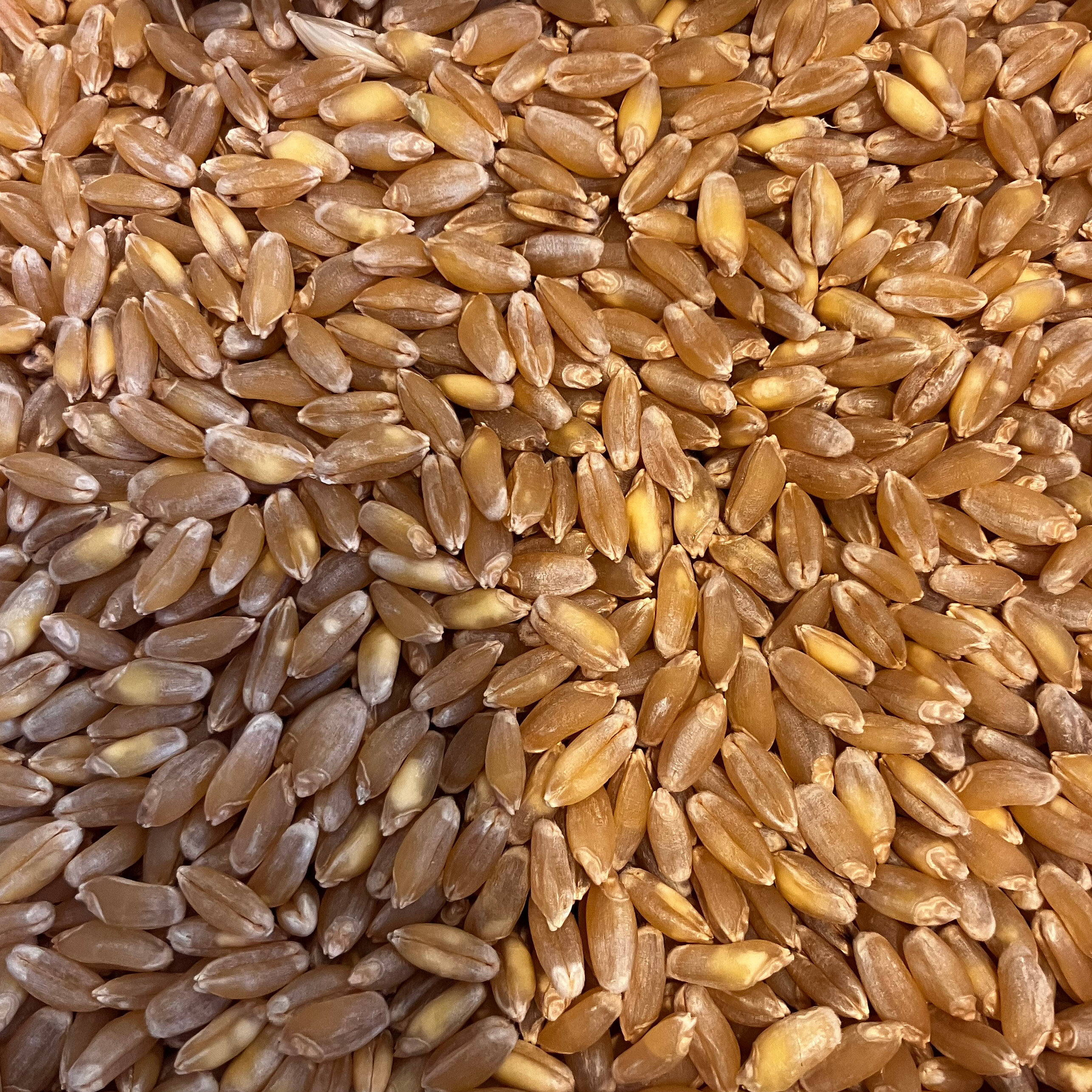
Triticum durum
Order: Sweet grasses (Poales)
Family: Sweet grasses (Poaceae)
Subfamily: Pooideae
Tribus: Triticeae
Genus: Wheat (Triticum)
Morphological Characteristics of Durum Wheat:
Growth habit:
A winter-annual, tuft-forming grass with an erect stem. The stem is divided into nodes and internodes; the nodes are solid, while the internodes are usually hollow.
Tillering can produce several stems from a single plant.
Winter durum is sown in autumn. It generally has a vernalization requirement and a degree of winter hardiness that varies by cultivar.
Leaves:
Leaves are alternate and arranged in two ranks. The leaf blades are flat, linear to lance-shaped, and parallel-veined; the leaf sheaths encircle the stem.
Leaf auricles:
Usually small and ciliate. Their size and degree of hairiness vary.
Ciliate auricles also occur in other wheat species and are not a definitive identifying feature of durum wheat.
Ligule:
Short and membranous; its shape and margin can vary.
Spike:
Terminal and usually upright. A single spikelet is borne at each node of the rachis; the spikelets alternate in two opposite rows.
Each spikelet is enclosed by two glumes and contains several florets.
In many durum cultivars, the spike is dense and compact, although this varies.
Awns:
Durum wheat is typically awned.
Awn length and development depend on the cultivar and genotype.
Grain (caryopsis):
Usually oblong to elliptical, with a distinct ventral crease and a tuft of hairs at the apical end.
The grain is typically hard and often vitreous; its colour is usually yellowish to amber.
The yellow colour of the endosperm is associated with its carotenoid content.
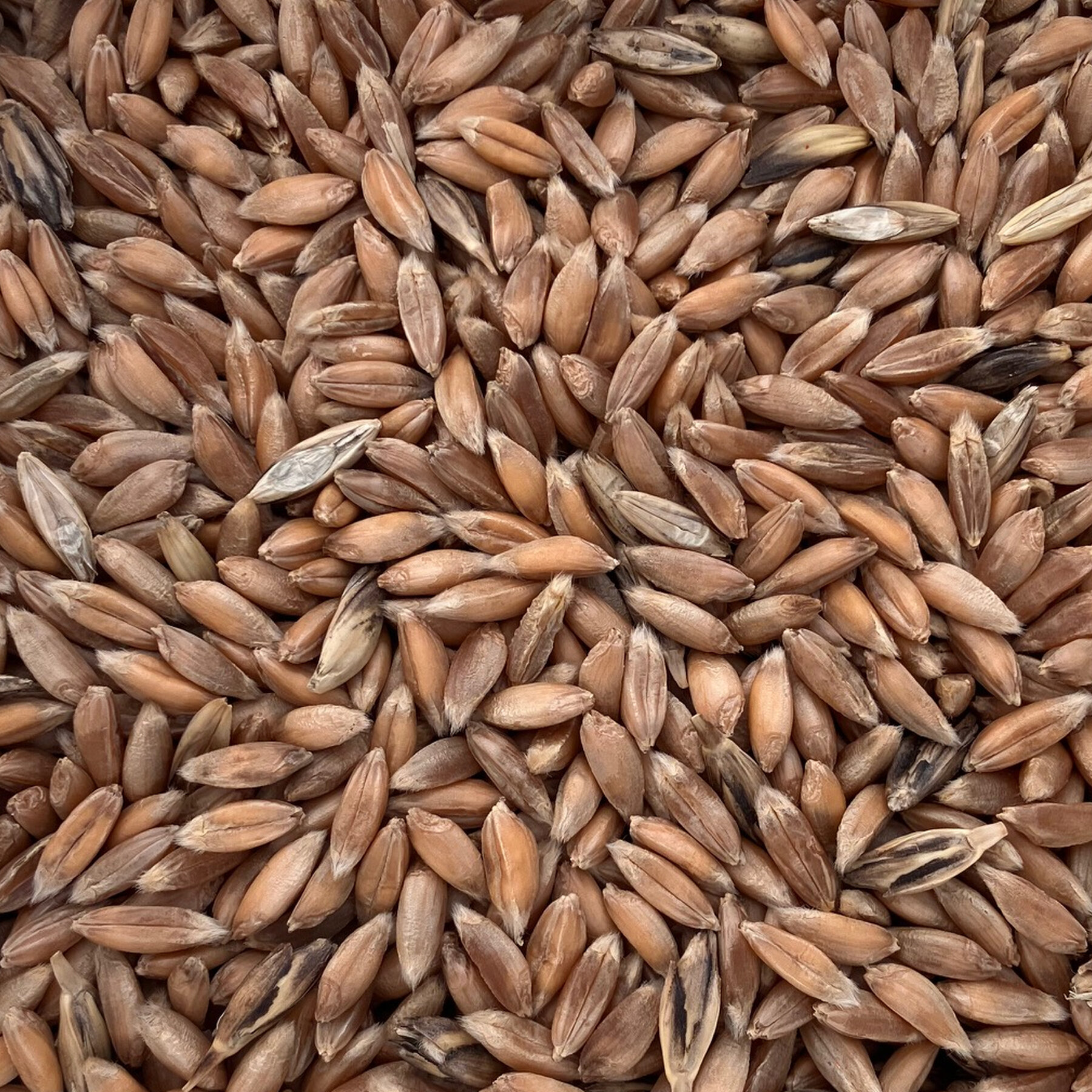
Triticum dioccum
Order: Sweet grasses (Poales)
Family: Sweet grasses (Poaceae)
Subfamily: Pooideae
Tribus: Triticeae
Genus: Wheat (Triticum)
Morphological characteristics of Emmer:
Scientific Note:
Emmer (Triticum dicoccum) belongs to the hulled wheats
A characteristic feature is the strong attachment of the caryopsis to the surrounding hulls, so that the grains do not separate completely from them during threshing
The combination of spike structure, glume characteristics, awns, and leaf characteristics allows for morphological characterization
Growth habit:
Annual, tuft-forming grass with an erect, usually hollow culm
The culm is divided into several nodes and internodes and may produce several culms through tillering
Leaves:
Leaves are alternate and arranged in two rows (distichous). The leaf blades are flat, linear to lanceolate, and parallel-veined. The leaf sheaths enclose the culm
Auricles:
Short, sickle-shaped, and partially clasping the culm. The auricles are distinctly ciliate
Important field characteristic: short, distinctly ciliate auricles
Ligule:
Membranous and relatively short, usually about 1–4 mm long. The upper margin is predominantly truncate and may be smooth to finely toothed
Spike:
Terminal, erect, elongated, and two-ranked. The spikelets are borne individually at the nodes of the rachis and contain several florets
The spike is relatively compact and possesses a robust, clearly developed rachis
At maturity, the rachis breaks into individual segments, while the spikelets remain firmly enclosed by the glumes
Awns:
The spike is typically awned
The awns may reach several centimetres in length and arise from the lemmas
Their length and development may vary depending on the cultivar and genotype
Grain (caryopsis):
The caryopsis is oval to ellipsoidal, with a distinct longitudinal or ventral crease and a tuft of hairs at the distal end
In emmer, the caryopsis remains firmly enclosed by the lemma and palea after maturity
The grains may vary in colour from yellowish and yellowish-brown to reddish, depending on the genotype
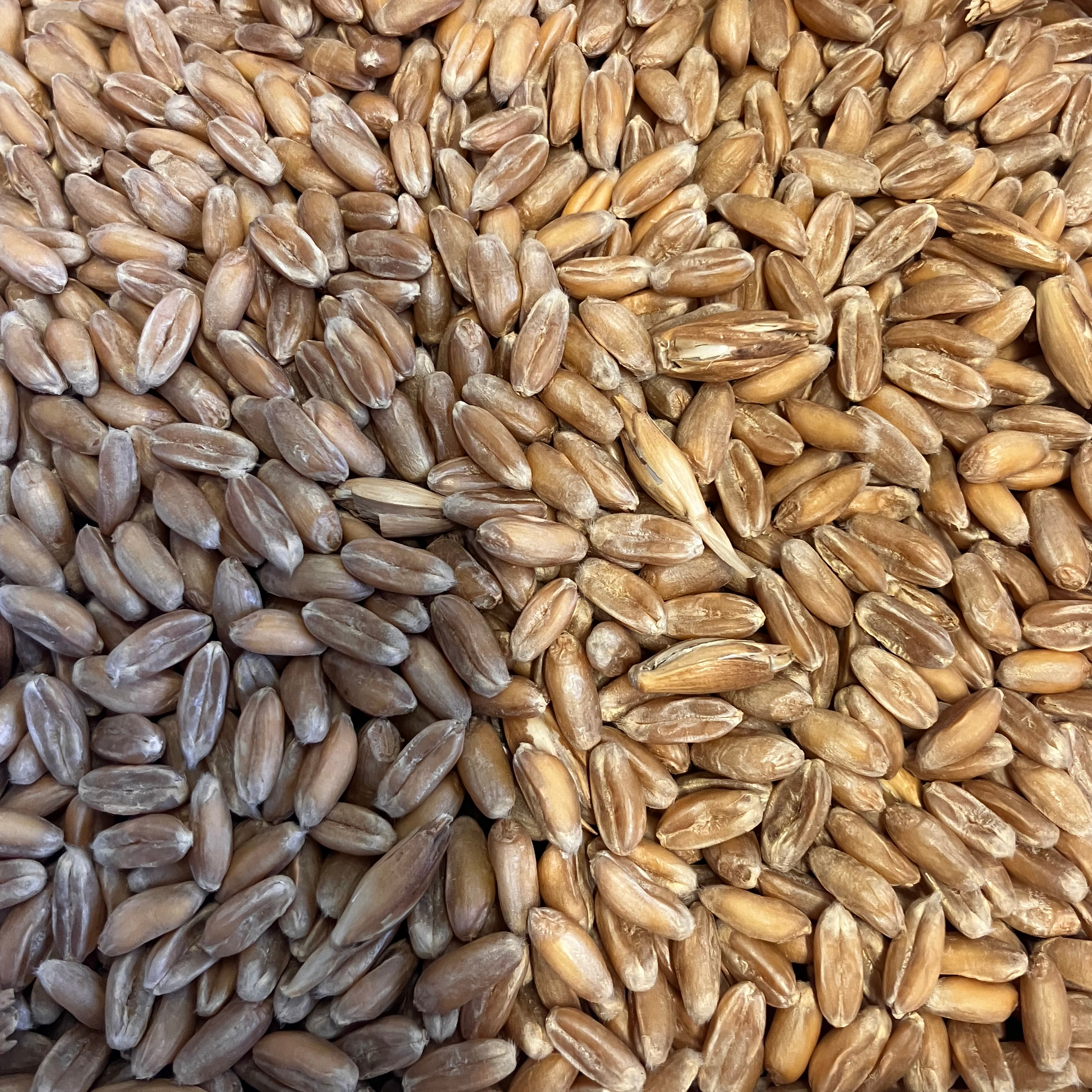
Triticum aestivum ssp. spelta
Order: Sweet grasses (Poales)
Family: Sweet grasses (Poaceae)
Subfamily: Pooideae
Tribus: Triticeae
Genus: Wheat (Triticum)
Morphological characteristics of Spelt:
Scientific Note:
Spelt (Triticum spelta L.) belongs to the group of hulled wheats
A characteristic feature is the firm attachment of the caryopsis to the glumes, so that the grains do not separate completely from them during threshing
Growth habit:
Annual, tuft-forming grass with an erect, usually hollow culm
The culm is divided by several nodes and internodes and may produce lateral shoots through tillering
Leaves:
Leaves alternate and arranged in two ranks. The leaf blades are flat, linear to lanceolate, parallel-veined, and have a rough surface. The leaf sheaths enclose the culm
Auriculae:
Short, sickle-shaped, partially clasping the culm, and distinctly ciliate
Important field characteristic: short, distinctly ciliate leaf auricles
Ligule:
Membranous and relatively short. The upper margin is predominantly truncate and may be smooth to finely toothed
Spike:
Terminal, erect to slightly nodding, elongated, and two-ranked. The spikelets are borne singly at the nodes of the rachis and contain several florets
The spike is comparatively long and loosely structured
At maturity, the rachis breaks into individual rachis segments, while the spikelets remain firmly enclosed by the hulls
Awns:
The spikelets may be awned or awnless
In awned forms, the awns arise from the lemmas and may be several centimetres long
However, their length and development vary depending on the cultivar or genotype
Grain (caryopsis):
Caryopsis elongated to elliptical, with a distinct ventral crease and a tuft of hairs at the distal end
In spelt, the caryopsis remains firmly enclosed by the lemma and palea after maturity
Depending on the genotype, the grains may range in color from yellowish to yellowish-brown to reddish
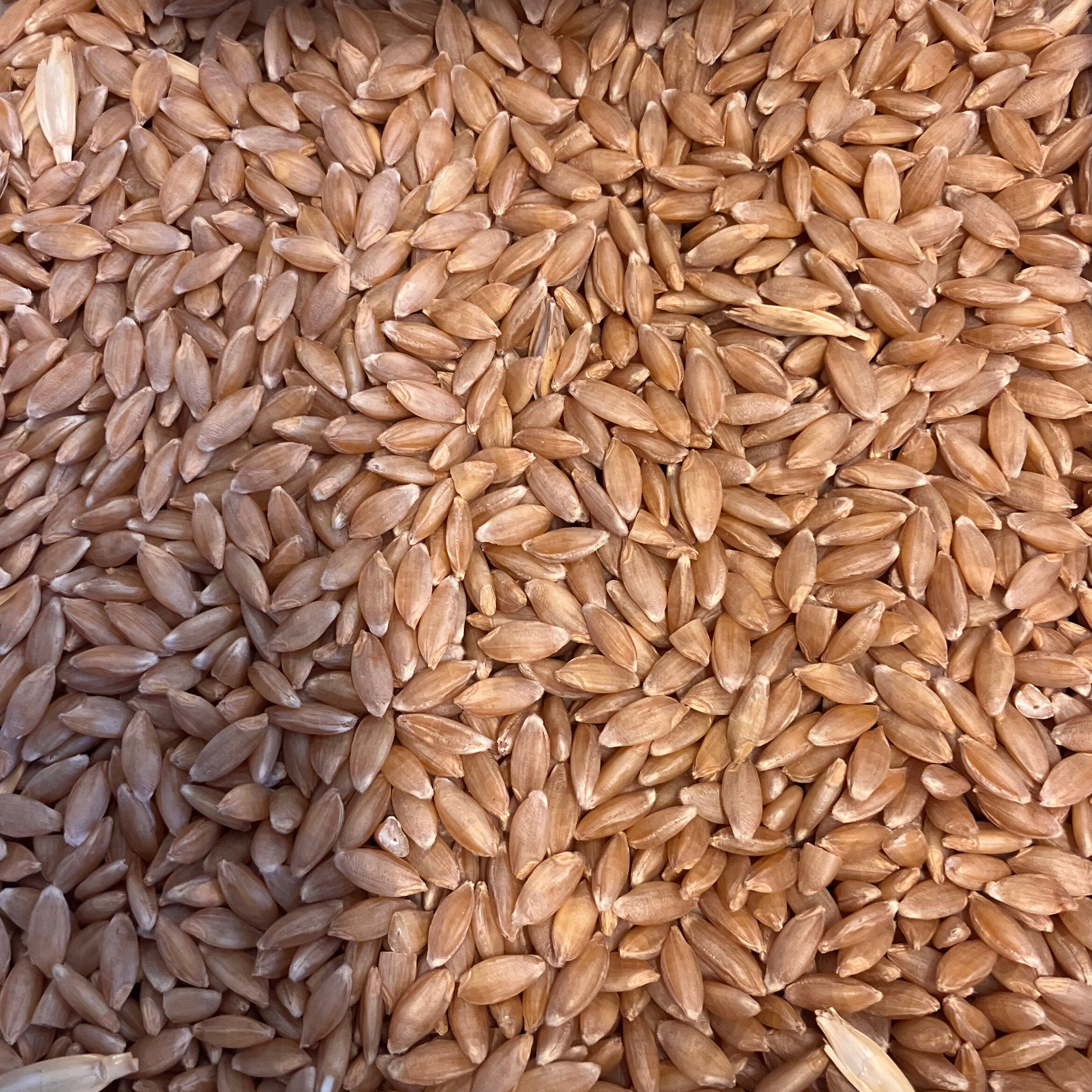
Triticum monococcum
Order: Sweet grasses (Poales)
Family: Sweet grasses (Poaceae)
Subfamily: Pooideae
Tribus: Triticeae
Genus: Wheat (Triticum)
Morphological characteristics of Einkorn:
Scientific Note:
Einkorn (Triticum monococcum L.) is a diploid, annual spelt wheat species
After maturity, the caryopsis remains firmly attached to the surrounding hulls and is not completely released during threshing
A characteristic feature of einkorn is the development of only one fully developed grain per spikelet.
Growth habit:
Annual, tuft-forming grass with an erect, usually hollow and relatively slender culm
The culm is divided into several nodes and internodes. Tillering may result in several culms emerging from a single plant
Leaves:
Leaves are alternate and arranged in two rows (distichous). The leaf blades are flat, linear to lanceolate, and parallel-veined. The leaf sheaths enclose the culm
Auricles:
Short, sickle-shaped, and partially clasping the culm. The auricles are distinctly ciliate
Important field characteristic: short, distinctly ciliate leaf auricles
Ligule
Membranous and relatively short. The upper margin is predominantly truncate and may be smooth to finely toothed
Spike:
Terminal, erect, narrow, and elongated. The spikelets are borne individually at the nodes of the rachis and each is enclosed by two glumes
Each spikelet typically contains one fully developed caryopsis, while additional florets may be reduced or sterile
This characteristic clearly distinguishes einkorn from multi-grained hulled wheats such as emmer
At maturity, the rachis breaks into individual segments, while the spikelets remain firmly enclosed by the hulls
Awns:
The spike is typically awned
The awns arise from the lemmas and may extend clearly beyond the spikelets
Their length and development may vary depending on the genotype
Grain (caryopsis):
The caryopsis is small, comparatively narrow, elongated to elliptical, and usually has a distinct ventral groove
After maturity, the caryopsis remains firmly enclosed by the lemma and palea
Grain colour may vary from yellowish to yellowish-brown depending on the genotype