Morphological characteristics of spring oilseed rape:
Growth Habit:
Annual crop plant with an upright stem, branched in its upper part, and a strong taproot.
When sown in spring under typical conditions, it undergoes a comparatively short rosette stage and reaches flowering and seed maturity within the year of sowing.
Does not require a prolonged period of cold to induce flowering and therefore has no obligatory vernalisation requirement.
Often less vigorous and less extensively branched than winter oilseed rape; however, these characteristics depend strongly on the cultivar and growing conditions.
Leaves:
Usually blue-green with a waxy bloom; the degree of waxiness varies.
- Lower leaves:
Petiolate, relatively large, usually lyrately lobed to pinnatifid, with a large terminal lobe and smaller lateral lobes; glabrous to sparsely hairy.
- Upper leaves:
Smaller, undivided, oblong to lanceolate, and predominantly glabrous; sessile, with a broadened, auriculate base that partially clasps the stem.
Flowers:
Yellow flowers with four sepals and four petals arranged in a cross.
Six stamens: four long and two short.
Flowers borne in terminal racemes that elongate during flowering.
The flower buds at the tip usually extend above the open flowers.
Fruits and Fruiting Structures:
Long, narrow siliques (seed pods) with a short terminal beak and numerous seeds.
The siliques are borne on stalks in racemes on the main stem and lateral branches.
Within each raceme, ripening generally progresses from the bottom upwards.
Seeds:
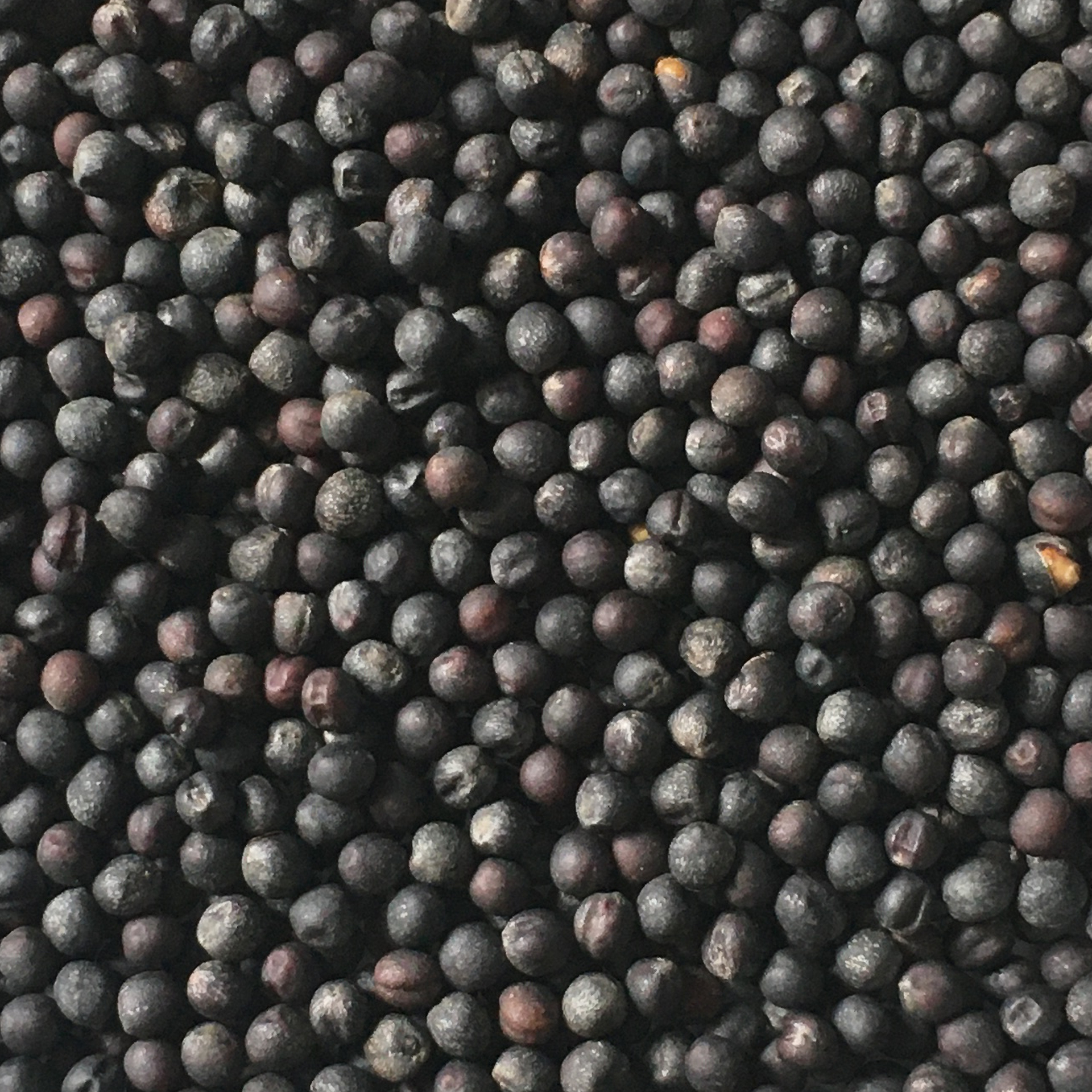
Small, rounded to spherical, usually dark brown to black.