Pome fruit
Pome fruits are fruits with a characteristic core containing five seed chambers. The seeds are enclosed within these chambers, while the edible flesh surrounds the core. Common pome fruits include apples, pears, quinces, and medlars.
Pome fruits are fruits with a characteristic core containing five seed chambers. The seeds are enclosed within these chambers, while the edible flesh surrounds the core. Common pome fruits include apples, pears, quinces, and medlars.
| Type | Cultivated apple |
| Variety | ‘Golden Delicious’ ‘Golden Delicious’ originated as a chance seedling in West Virginia, USA, and was selected in the early 20th century. The variety is not genetically related to ‘Red Delicious’ |
| Harvest period | Late September to October; ‘Golden Delicious’ is generally classified as a mid- to late-season cultivar |
| Eating period | From October, usually after a short period of post-harvest ripening; under suitable storage conditions, it can be stored until about March; the flavor quality continues to develop during post-harvest ripening |
| Fruit | Medium to large; roundish to broadly conical or slightly conical, often tall and sometimes slightly ribbed Flesh: yellowish-white to cream-colored, fine-textured, medium-firm, juicy, and crisp when fully ripe Fruit are relatively susceptible to pressure damage and water loss and should therefore be handled carefully |
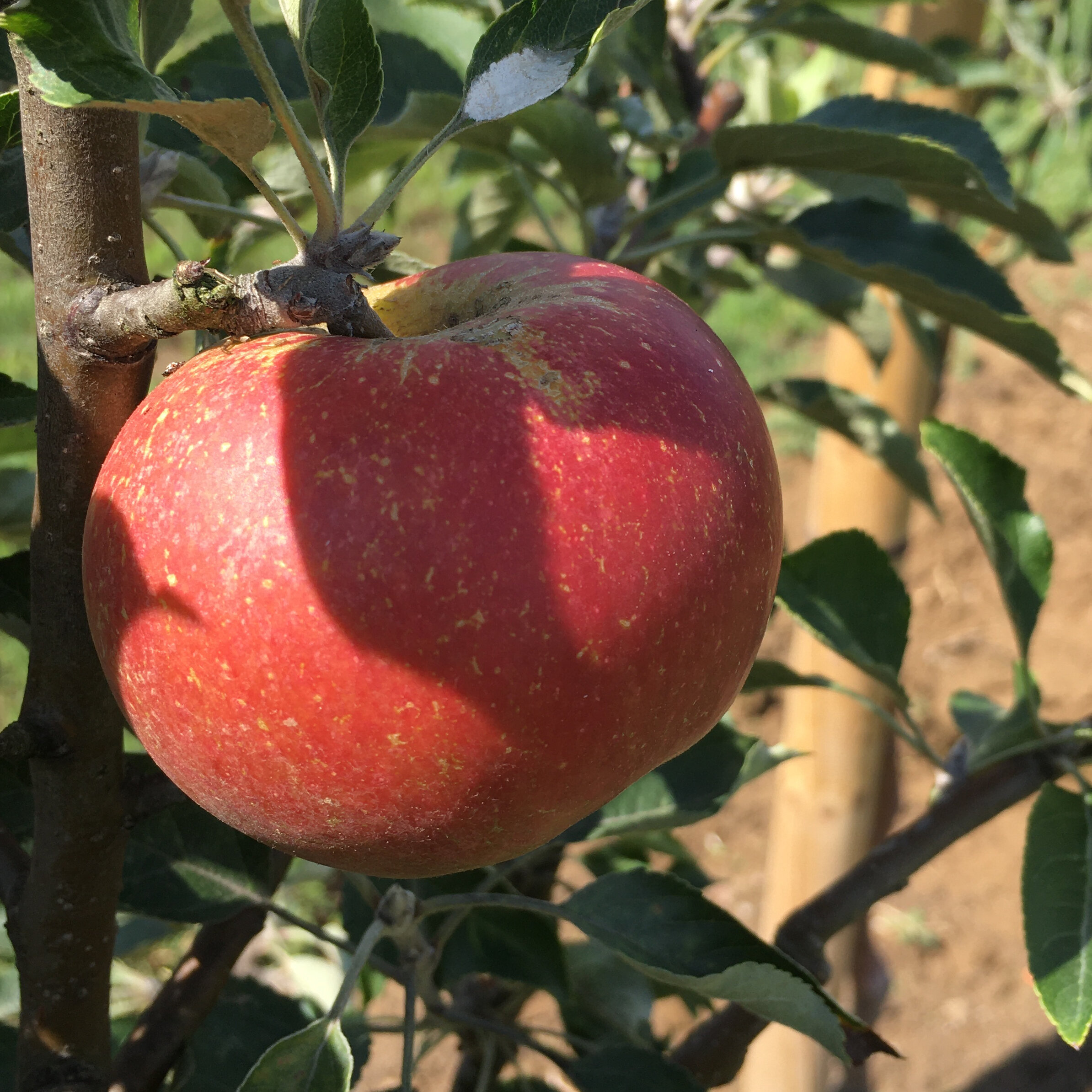
| Color | Ground color initially greenish to greenish-yellow; becoming yellow to golden yellow with increasing maturity A weak orange, pinkish, or reddish blush may develop on the sun-exposed side Under certain environmental conditions, russeting may occur, particularly around the stem cavity or lenticels |
| Flavour | Sweet and aromatic, with low to moderate acidity and a characteristic, pronounced aroma Depending on maturity and growing conditions, sensory descriptions may include honey-like, spicy, anise-like, or fennel-like notes Fruit harvested before adequate physiological and sensory maturity may exhibit a less developed aroma and flavor profile |
| Uses | Primarily a table apple for fresh consumption; also suitable for fruit salads, baking, cooking, applesauce, and juice production |
| Storage life | Good to very good, although storage life depends heavily on the harvest date and storage conditions Under conventional cold storage, the apples can be stored for several months; under suitable controlled atmosphere (CA) conditions, ‘Golden Delicious’ can be stored significantly longer However, the variety is particularly susceptible to water loss and shriveling |
| Susceptibility | Apple scab (Venturia inaequalis): moderately to highly susceptible; infection can become severe under conditions favorable for scab development Powdery mildew (Podosphaera leucotricha): low to moderate susceptibility, although incidence may vary with site and weather conditions Fire blight (Erwinia amylovora): low to moderate susceptibility; relative tolerance has been reported in some sources European apple canker (Neonectria ditissima): generally not regarded as exhibiting exceptionally high cultivar-specific susceptibility, although infections may occur under favorable conditions, particularly through wounds Apple rusts (Gymnosporangium spp.): potential relevance depends on the rust species and local epidemiological conditions Codling moth (Cydia pomonella): no specific genetic resistance known |
| Growth | Moderate growth, depending on rootstock and location; often well-branched with an upright to broadly upright or broadly conical crown structure The variety bears fruit early and can produce high, relatively consistent yields; fruit thinning is advisable if the fruit load is excessive Proper training and maintenance pruning is recommended to regulate the canopy structure, improve light distribution, and maintain productive fruiting wood Deciduous foliage White to pale pink flowers, April through May |
| Site requirements | Sunny to full-sun locations that are as warm and well-ventilated as possible are ideal Deep, fertile, humus-rich, and well-drained soils with adequate water supply are ideal Waterlogged conditions and heavily compacted soils should be avoided Adequate sunlight enhances fruit color, sugar content, and aroma |
| Hardiness | Generally sufficiently to highly winter-hardy under Central European conditions; the perennial wood has relatively good tolerance to winter frost Flowers and young fruit sets can be damaged by late frosts during flowering |
| Nutrient Requirements | Moderate; for regular and high yields, aim for a balanced nutrient supply tailored to the tree’s needs Excessive nitrogen application should be avoided, as it can negatively affect the prevention of excessive vegetative growth, susceptibility to certain diseases, and fruit quality Fertilization should preferably be based on soil tests, yield levels, and, if necessary, leaf analyses |
| Plant Protection | ‘Golden Delicious’ is not classified as a disease-resistant or scab-resistant variety. Apple scab, in particular, can cause significant problems Powdery mildew may also occur, depending on location and weather conditions Fire blight is possible, while apple canker does not represent a notable variety-specific susceptibility In addition, apple rust, apple aphids, and various types of storage and fruit rot may be relevant Integrated pest management is recommended, including appropriate site selection, an open canopy structure, regular professional pruning, and the removal of infected plant parts and mummified fruit |
| Type | Cultivated apple |
| Variety | ‘Gala’ ‘Gala’ was bred by J. H. Kidd in New Zealand from a cross between ‘Kidd’s Orange Red’ and ‘Golden Delicious’ |
| Harvest period | Early to mid-September under Central European conditions; depending on location and weather conditions, the harvest may extend through late September or early October ‘Gala’ is thus classified as an early- to mid-early ripening fall variety. |
| Eating period | From September onward; several months with proper storage; fruit quality is particularly high immediately after harvest and throughout the first few weeks of storage |
| Fruit | Small to medium-sized; roundish to tall or broad-conical, sometimes slightly ribbed The flesh is creamy white to yellowish, firm, finely textured, crisp, and juicy |
| Color | Ground color greenish-yellow to yellow; overcolor orange-red to bright red, often striped, flamed, or slightly mottled |
| Flavour | Sweet to sweet-tart, with comparatively low to moderate acidity and a mild, characteristic fruit aroma The fruits are very juicy and aromatic. Descriptions mentioning pear or vanilla notes may appear as sensory nuances |
| Suitability | Primarily a dessert/table apple for fresh consumption; also suitable for fruit salads, baking, cooking, and juice production |
| Storage Life | Good for an early- to mid-season cultivar; Under suitable cold storage conditions, ‘Gala’ can be stored for several months Under controlled atmosphere conditions, storage periods of about 4–5 months are possible; firmness and acidity can be maintained relatively well. |
| Susceptibility | Apple scab (Venturia inaequalis): moderately to highly susceptible; susceptibility can become significantly more pronounced under humid infection conditions. Powdery mildew (Podosphaera leucotricha): moderately susceptible. Fire blight (Erwinia amylovora): susceptible; the disease can become a significant problem under high infection pressure. Apple canker (Neonectria ditissima): susceptible; the actual significance depends heavily on location, weather, and wound management. Codling moth (Cydia pomonella): no specific genetic resistance known |
| Growth | Moderately vigorous to vigorous; upright to broadly upright, well-branched canopy The variety produces abundant fruit spurs and may tend toward regular fruit set Proper training and maintenance pruning is recommended to regulate the canopy structure, improve light distribution, and preserve productive fruitwood When the tree is heavily laden with fruit, thinning may be necessary to regulate fruit size and ensure adequate fruit quality Deciduous foliage White to light pink flowers, April through May |
| Site requirements | Sunny to full-sun sites; preferably warm and well ventilated Deep, fertile, humus-rich, and well-drained soils with adequate water supply are ideal Waterlogged and heavily compacted soils should be avoided |
| Hardiness | Generally sufficiently hardy under Central European conditions; the perennial wood exhibits good tolerance to winter frost Flowers and young fruit buds can be damaged by late frosts during flowering |
| Nutrient Requirements | Moderate; for regular and high yields, a balanced nutrient supply tailored to the plant’s needs should be maintained Excessive nitrogen application should be avoided, as it can lead to excessive vegetative growth, increase susceptibility to certain diseases, and adversely affect fruit quality Fertilization should preferably be based on soil analysis, crop yield, and, where appropriate, foliar nutrient analysis |
| Plant Protection | ‘Gala’ is not classified as a disease-resistant or scab-resistant variety Apple scab and powdery mildew, in particular, can pose significant problems; fire blight can also be a major concern, and fruit tree canker and fire blight may also occur Integrated pest management—including appropriate site selection, an open canopy structure, regular professional pruning, and the removal of infected plant parts and mummified fruit—is recommended |
| Type | Cultivated apple |
| Variety | ‘Wellant’ ‘Wellant’ was bred in 1987 at the Plant Research International research institute in Wageningen, the Netherlands |
| Harvest period | Late September to October; ‘Wellant’ is generally classified as a medium-late to late-ripening cultivar The precise harvest date depends on growing region, seasonal conditions, and fruit maturity |
| Eating period | From October; under suitable storage conditions, approximately until March During storage, the aroma may continue to develop, whereas firmness and acidity may gradually decline |
| Fruit | Medium to large; roundish to slightly flattened, sometimes slightly irregular in shape The flesh is greenish-white to cream-colored, firm, fine-textured, juicy, and crisp. Firmness gradually decreases during prolonged storage |
| Color | Ground color greenish-yellow to yellow; overcolor orange-red to deep red, often expressed as stripes, flames, or mottling |
| Flavour | Sweet to sweet-tart, with relatively mild acidity and a pronounced, characteristic apple aroma Depending on the stage of ripeness, fruity and slightly spicy notes may become more prominent. |
| Uses | Primarily a dessert apple for fresh consumption; also suitable for baking and other culinary applications |
| Storage Life | Good to very good. Under suitable cold-storage conditions, ‘Wellant’ can be stored for several months, approximately until February or March |
| Susceptibility | Apple scab (Venturia inaequalis): moderately susceptible to susceptible Powdery mildew (Podosphaera leucotricha): moderately susceptible to susceptible Fruit tree canker (Neonectria ditissima): susceptible Fire blight (Erwinia amylovora): low to moderately susceptible Fruit and storage rots: may occur under favorable infection and storage conditions |
| Growth | Moderate to vigorous growth; well-branched, with a somewhat upright to broadly upright crown structure Regular training and maintenance pruning is recommended to regulate the canopy structure, improve light penetration, and maintain a productive fruiting wood system When the fruit load is heavy, fruit thinning may be necessary to regulate fruit size and ensure adequate fruit quality Deciduous foliage White to light pink flowers, April to May |
| Site requirements | Full sun to light partial shade; locations that are as warm and well-ventilated as possible Deep, fertile, humus-rich, and well-drained soils with adequate water supply are ideal Waterlogged and heavily compacted soils should be avoided |
| Hardiness | Generally Sufficiently hardy under Central European conditions; the perennial wood exhibits adequate tolerance to winter frost Flowers and young fruit buds can be damaged by late frosts during flowering |
| Nutrient Requirements | Moderate to high under regular and high cropping levels; a balanced nutrient supply should be maintained Excessive nitrogen application should be avoided, as it can lead to excessive vegetative growth, increase susceptibility to certain diseases, and adversely affect fruit quality Fertilization should preferably be based on soil tests, yield levels, and, if necessary, leaf analyses |
| Plant Protection | ‘Wellant’ is not considered a disease-resistant or scab-resistant cultivar Apple scab and powdery mildew, in particular, can pose significant problems; fire blight can also be a major concern, and fruit tree canker and fire blight may also occur Integrated pest management, including appropriate site selection, an open canopy structure, regular professional pruning, and the removal of infected plant parts and mummified fruit, is recommended |
| Type | Cultivated apple |
| Variety | ‘Cox’s Orange Pippin’ The variety originated in England around 1825 as a chance seedling and was selected and propagated by Richard Cox |
| Harvest period | September to early October; under Central European conditions, typically from mid-September to early October |
| Eating period | Approximately October through January; under suitable storage conditions, the consumption period can be extended through February/March |
| Fruit | Medium-sized; round to slightly flattened, occasionally somewhat irregular in shape The flesh is yellowish-white to cream-colored, firm, fine-textured, and juicy. Fruit texture and aroma develop further during post-harvest ripening |
| Color | Ground color greenish-yellow to yellow; overcolor orange-red to reddish-orange, sometimes with brownish-red tones, particularly on the sun-exposed sidebr |
| Flavour | Distinctly aromatic, sweet-tart, and delicately spicy; with fruity, nutty, and, in some cases, citrus- or orange-like flavor notes The intense aroma is one of the variety’s most important quality characteristics |
| Suitability | High-quality dessert apple primarily intended for fresh consumption; also suitable for baking and cooking and, to a lesser extent, for juice and cider production |
| Storage Life | Moderate to good; Under appropriate cold-storage conditions, fruit can be stored for several months, Generally through January and, depending on harvest maturity and storage conditions, into February or March |
| Susceptibility | Apple scab (Venturia inaequalis): highly susceptible Powdery mildew (Podosphaera leucotricha): moderately to highly susceptible Apple canker (Neonectria ditissima): susceptible Fire blight (Erwinia amylovora): susceptible Fruit rot may also occur, particularly Monilinia spp. |
| Growth | Moderately vigorous to vigorous; well-branched, with a somewhat upright to broadly upright canopy Regular training and maintenance pruning are required to maintain canopy structure, light penetration, and productive fruiting wood Fruit thinning may be necessary under high crop loads to regulate fruit size and maintain fruit quality Deciduous foliage White to light pink flowers, April through May |
| Site requirements | Full sun to light partial shade; as warm and well-ventilated as possible Deep, fertile, humus-rich, and well-drained soils with adequate water supply are ideal Waterlogged and heavily compacted soils should be avoided |
| Hardiness | Moderate to high under conditions of regular and high cropping The wood has comparatively good winter-frost tolerance; however, flowers and young fruitlets may be damaged by late frosts during and shortly after flowering |
| Nutrient Requirements | Moderate to high for regular and high yields; a balanced nutrient supply should be maintained Excessive nitrogen should be avoided, as it can lead to excessive vegetative growth and negatively affect susceptibility to certain diseases and fruit quality Fertilization should preferably be based on soil tests, yield levels, and, if necessary, leaf analyses |
| Plant Protection | ‘Cox’s Orange Pippin’ is not classified as a disease-resistant or scab-resistant variety Apple scab and powdery mildew, in particular, can pose significant problems; fire blight can also be a major concern Integrated pest management (IPM) is therefore recommended, including appropriate site selection, an open and well-ventilated canopy, regular and targeted pruning, monitoring of disease incidence, and removal of infected plant material and mummified fruit |
| Type | Cultivated apple |
| Variety | ‘Idared’ ‘Idared’ was selected in 1942 at the University of Idaho, USA, from a cross between ‘Jonathan’ and ‘Wagner’ |
| Harvest period | Late September to October |
| Eating period | From November; depending on harvest maturity and storage conditions, fruit quality can be maintained until approximately April ‘Idared’ is considered a winter apple cultivar with good storage potential |
| Fruit | Medium-sized to large; round to slightly flattened; The flesh is whitish to cream-colored, firm, compact, juicy, and crisp at harvest During prolonged storage, flesh firmness gradually decreases and the texture may become softer |
| Color | Ground color greenish-yellow to yellow; overcolor bright red to dark red, often expressed as stripes, marbling, or an extensive washed coloration |
| Flavour | At harvest, tart to sweet-tart, with moderate acidity and a relatively mild, variety-specific aroma During storage, acidity gradually decreases and the flavor becomes milder, sweeter, and more harmonious |
| Suitability | Primarily a dessert apple for fresh consumption; also suitable for baking, compote, and juice production. The firm flesh provides good culinary properties |
| Storage Life | Very good; under suitable cold storage conditions, ‘Idared’ can be stored for about 5–6 months Flesh firmness and acidity may decrease with prolonged storage |
| Susceptibility | Apple scab (Venturia inaequalis): moderately to highly susceptible Powdery mildew (Podosphaera leucotricha): moderately to highly susceptible Fire blight (Erwinia amylovora): susceptible; particularly in regions with high infection pressure Apple canker (Neonectria ditissima): susceptible to moderately susceptible Codling moth (Cydia pomonella): no specific genetic resistance known |
| Growth | Moderate to vigorous growth; upright to broadly upright canopy structure; well-branched The cultivar has good yield potential and may begin bearing relatively early; fruit-load regulation through thinning may therefore be necessary The variety can produce consistent yields but requires appropriate renewal of fruiting wood and proper maintenance pruning Deciduous foliage White to light pink flowers, April through May |
| Site requirements | Full-sun to light partial shade; as warm and well-ventilated as possible Deep, fertile, humus-rich, and well-drained soils with an adequate and relatively consistent water supply are preferred Waterlogged and heavily compacted soils should be avoided |
| Hardiness | Highly winter-hardy under Central European conditions; the wood exhibits comparatively good tolerance to winter frost. Flowers and young fruit buds can be damaged by late frosts during flowering |
| Nutrient requirements | Moderate; a balanced supply of nutrients is recommended Excessive nitrogen should be avoided, as it can lead to excessive vegetative growth, increase susceptibility to certain diseases, and negatively affect fruit quality Ensure a balanced leaf-to-fruit ratio and an adequate supply of magnesium |
| Plant Protection | ‘Idared’ is not classified as a disease-resistant or scab-resistant variety Apple scab and powdery mildew, in particular, can pose significant problems; fire blight can also be a major concern Integrated pest management—including appropriate site selection, an open canopy structure, regular professional pruning, and the removal of infected plant parts and mummified fruit—is recommended |
| Type | Cultivated apple |
| Variety | ‘Natyra®’ ‘Natyra®’ was developed within the apple-breeding program of Wageningen University & Research in the Netherlands |
| Harvest period | Late September to mid-October; depending on growing region and seasonal conditions, harvest maturity may be reached around early to mid-Octobe |
| Eating period | From October onward; under suitable storage conditions, fruit quality can be maintained well into spring |
| Fruit | Medium-sized to large, roundish to slightly flattened and occasionally slightly conical; generally of medium height The flesh is cream-colored to light yellow, very firm, crisp, and juicy High flesh firmness is an important quality characteristic and is relatively well maintained during storage |
| Color | Ground color greenish-yellow to yellow; overcolor bright red to dark red, often with a high proportion of overcolor |
| Flavour | Sweet-tart, distinctly aromatic and complex, with a clearly perceptible acidity and spicy-fruity flavor notes |
| Suitability | Primarily a high-quality dessert apple for fresh consumption Owing to its high flesh firmness, juiciness, and good storage life, this variety is particularly well-suited for marketing over an extended period |
| Storage Life | Very good to excellent; under conventional cold storage conditions, storage is possible until around December Under controlled atmosphere (CA storage), ‘Natyra’ can be stored until July/August, depending on storage conditions and harvest time |
| Susceptibility | Apple scab (Venturia inaequalis): Resistant to scab due to the Rvi6-(Vf) resistance Powdery mildew (Podosphaera leucotricha): low to moderate susceptibility Fire blight (Erwinia amylovora): Moderate susceptibility Apple canker (Neonectria ditissima): low to moderate susceptibility Codling moth (Cydia pomonella): no specific resistance known |
| Growth | Weak to moderately vigorous growth, particularly on low-vigour rootstocks Natural lateral branching is relatively limited; lateral branches are relatively short The branches are horizontal to upright, and the tree structure is comparatively open Deciduous foliage White to pale pink flowers; April through May |
| Site Requirements | Sunny to full-sun locations, preferably well-aerated Deep, fertile, humus-rich, and well-drained soils with adequate water supply are suitable Avoid waterlogged and heavily compacted soils Due to its relatively slow growth, good soil conditions and an appropriate choice of rootstock are particularly important |
| Hardiness | Generally sufficiently hardy under Central European conditions Flowers and young fruit sets can be damaged by late frosts during flowering |
| Nutrient Requirements | Moderate; a balanced supply of nutrients is recommended Excessive nitrogen should be avoided, as it can lead to excessive vegetative growth, increase susceptibility to certain diseases, and negatively affect fruit quality Ensure a balanced leaf-to-fruit ratio and an adequate supply of magnesium |
| Plant Protection | ‘Natyra’ is among the disease-tolerant or scab-resistant apple varieties, but it is not resistant to all diseases Genetic scab resistance (Vf/Rvi6) significantly reduces the risk of scab, but can be overcome. Powdery mildew usually occurs only to a limited extent. Fire blight and, in particular, collar rot, on the other hand, can be significant issues Integrated pest management—including appropriate site selection, an open canopy structure, regular and proper pruning, and the removal of infected plant parts and mummified fruit—is recommended |
| Type | Cultivated apple |
| Variety | ‘Topaz’ ‘Topaz’ was bred at the Institute of Experimental Botany in Prague (Strážovice/Strizovice, Czech Republic); the cross was made in 1984, and the variety was introduced in the early 1990s |
| Harvest period | Mid- to late September; under Central European conditions, sometimes late September through early October ‘Topaz’ is therefore a mid-late to late-maturing cultivar Fruit maturity is relatively uniform, and one or two picking passes may generally be sufficient |
| Eating period | From October or November, under suitable conditions, acceptable eating quality can generally be maintained until approximately March; the flavor continues to develop during storage |
| Fruit | Medium-sized, mostly round to slightly flattened or broad; some are slightly ribbed The flesh is cream-colored to yellowish, firm, finely textured, and very juicy At the start of storage, it is firm and crisp; firmness decreases as storage time increases |
| Color | Ground color greenish-yellow to yellow; overcolor orange to dark red, often striped, mottled or washed out |
| Flavour | Sweet-tart, distinctly aromatic and spicy, with clearly perceptible fruit acidity At harvest, the acidity can be relatively pronounced; during storage, a more balanced, aromatic flavor profile develops |
| Uses | Fresh consumption; dessert apple; baking; juice; very good storage life, up to March or April when refrigerated |
| Storage Life | Very good; in conventional cold-storage conditions, ‘Topaz’ can be stored until about March; under controlled atmosphere (CA/ULO), storage life can extend to April or May depending on storage conditions |
| Susceptibility | Apple scab (Venturia inaequalis): very low susceptibility; genetically scab-resistant (Vf-/Rvi6 resistance) Powdery mildew (Podosphaera leucotricha): low to moderate susceptibility Fire blight (Erwinia amylovora): low to moderate susceptibility Fruit tree canker (Neonectria ditissima): can occur; susceptibility may be relevant Collar rot (Phytophthora cactorum): increased susceptibility; Codling moth (Cydia pomonella): no specific cultivar resistance known |
| Growth | Initially moderate growth, later slower; crown broad and upright to spreading and well-branched Characterized by short internodes, low-angled branch emergence, and tufted branch tips Regular thinning is recommended to maintain good light penetration Deciduous foliage White to pale pink flowers; April through May |
| Site requirements | Sunny to full sun locations that are as well-ventilated as possible and protected from late frosts Deep, fertile, humus-rich, and well-drained soils with adequate water supply are suitable Waterlogged and heavily compacted soils should be avoided |
| Hardiness | Generally sufficiently hardy under Central European conditions Flowers, young fruit buds, and the wood can be damaged by late frosts during flowering |
| Nutrient Requirements | Moderate; a balanced supply of nutrients should be maintained Excessive nitrogen should be avoided, as it can lead to excessive vegetative growth, increase susceptibility to certain diseases, and negatively affect fruit quality For consistent yields, particular attention should be paid to potassium supply and a needs-based calcium supply as part of a soil and foliar fertilization strategy |
| Plant Protection | ‘Topaz’ is one of the disease-tolerant or scab-resistant apple varieties, but it is not resistant to all diseases Genetic scab resistance (Vf/Rvi6) significantly reduces the risk of scab, but can be overcome. Powdery mildew usually occurs only to a limited extent. Fire blight and, in particular, collar rot, on the other hand, can be significant issues Integrated pest management is recommended, including appropriate site selection, an open canopy structure, regular professional pruning, and the removal of infected plant parts and mummified fruit |
| Type | Cultivated apple |
| Variety | ‘Fuji’ ‘Fuji’ was bred in Japan and introduced as a variety in 1962 |
| Harvest period | Late October to early November; ‘Fuji’ is a late- to very late-maturing cultivar; in cool locations with a short growing season, fruit may fail to reach full maturity |
| Eating period | From November/December onward; under suitable storage conditions, acceptable eating quality can be maintained well into spring |
| Fruit | Medium-sized to large, roundish to slightly conical or elongated-round, occasionally asymmetrical The flesh is creamy white to pale yellow, very firm, crisp, and juicy; Fruit firmness is generally maintained relatively well during extended storage |
| Color | Ground colour yellowish-green to yellow; overcolour pink to dark red, frequently striped, mottled, flushed, or slightly washed out The intensity and distinctiveness of the red coloration can vary considerably among different ‘Fuji’ varieties |
| Flavour | Very sweet, with relatively low acidity, juicy, and aromatic The flavour is generally mild, fruity, and harmonious; honey-like notes may occur With advanced ripening, acidity may decrease further, resulting in a sweeter and less acidic flavour profile |
| Uses | Primarily used for fresh consumption as a dessert apple; also suitable for baking and juice production The combination of high sweetness, juiciness, crisp texture, and excellent storage potential is an important quality characteristic of the cultivar |
| Storage life | Very good to excellent; with proper cold storage, it keeps until May, and under controlled atmosphere, in some cases until June |
| Susceptibility | Apple scab (Venturia inaequalis): moderately to highly susceptible Powdery mildew (Podosphaera leucotricha): moderately susceptible Fire blight (Erwinia amylovora): Moderately to highly susceptible Fruit tree canker (Neonectria ditissima): moderately susceptible Codling moth (Cydia pomonella): no specific resistance known |
| Growth | Moderately vigorous to vigorous growth, with a broad to spreading crown structure The canopy is well branched; in older trees, fruiting branches may overhang more, and the canopy may be prone to defoliation The variety begins bearing fruit early and can produce high yields, although fruit load regulation may be necessary Deciduous foliage Heart-rooted White to pale pink flowers; April through May |
| Site requirements | Full-sun to lightly shaded, preferably warm sites with a long growing season Deep, fertile, humus-rich, well-drained soils with sufficient and relatively consistent water availability are suitable Cool sites with a short growing season are less favourable because of the cultivar's late maturity and potentially incomplete fruit ripening |
| Hardiness | Generally sufficiently hardy under Central European conditions Flowers, young fruit set, and the wood can be damaged by late frosts during flowering |
| Nutrient Requirements | Moderate; a balanced nutrient supply should be maintained Excessive nitrogen should be avoided, as it can lead to excessive vegetative growth, increase susceptibility to certain diseases, and negatively affect fruit quality For consistent yields, particular attention should be paid to potassium supply and a needs-based calcium supply as part of a soil and foliar fertilization strategy |
| Plant Protection | ‘Fuji’ is not classified as a disease-resistant variety Apple scab and fire blight, in particular, can cause significant problems; powdery mildew and fruit tree canker may also occur Integrated pest management, including appropriate site selection, an open canopy structure, regular professional pruning, and the removal of infected plant parts and mummified fruit, is recommended |
| Type | Cultivated apple |
| Variety | ‘Elstar’ This variety was bred in the Netherlands and selected in the 1950s from a cross between ‘Golden Delicious’ and ‘Ingrid Marie’. |
| Harvest period | Early to mid-September, depending on site, seasonal conditions, and fruit development Harvest is generally carried out before full eating quality has been reached. ‘Elstar’ is therefore considered an early- to mid-season autumn cultivar |
| Eating period | From September onward; depending on harvest date and storage conditions, fruit generally reaches optimal eating quality from September through November/December Under suitable cold-storage conditions, acceptable eating quality may persist somewhat longer |
| Fruit | Medium-sized; round to slightly oblate; occasionally slightly conical, the flesh is creamy white to pale yellow, firm, finely textured, juicy, and crisp Firmness generally decreases during prolonged storage and with over-ripening |
| Color | Ground colour yellowish-green to yellow; overcolour orange-red to bright red, frequently striped, flushed, or slightly marbled Development of the overcolour is promoted by adequate sunlight exposure |
| Flavour | Sweet-tart, juicy, and aromatic, with pronounced acidity and a characteristic fruity aroma that may include slightly spicy notes At optimal maturity, the sugar–acid balance is generally well developed |
| Uses | Primarily a high-quality dessert apple for fresh consumption; also suitable for fruit salads, baked goods, and various processing applications The cultivar is also suitable for juice production, particularly in blends, owing to its pronounced aroma |
| Storage life | Moderate to good; under suitable cold storage conditions, fruit quality can be maintained until around December/January, and in some cases until February However, compared to varieties known for their long-term storage capabilities, ‘Elstar’ is not considered to have particularly long storage life If stored for too long, fruit firmness and flavor intensity may decrease |
| Susceptibility | Apple scab (Venturia inaequalis): moderately to highly susceptible Powdery mildew (Podosphaera leucotricha): moderately susceptible Fire blight (Erwinia amylovora): moderately susceptible Apple canker (Neonectria ditissima): moderately susceptible to susceptible Codling moth (Cydia pomonella): no cultivar-specific resistance is established |
| Growth | Moderately vigorous, developing a broad, upright to spreading, well-branched canopy. The cultivar produces abundant fruiting wood and generally begins bearing at a relatively young age Regular formative and maintenance pruning is recommended to maintain canopy structure and light penetration. Crop-load regulation by fruit thinning may be necessary to achieve adequate fruit size and consistent fruit quality Deciduous foliage White to pale pink flowers; April through May |
| Site requirements | Sunny to full-sun, preferably warm and well-ventilated sites Suitable soils are deep, humus-rich, fertile, and well drained, with adequate and relatively consistent water availability Waterlogged and heavily compacted soils should be avoided |
| Hardiness | Sufficiently to well hardy under Central European conditions As in other apple cultivars, flowers and young fruitlets are susceptible to damage from late spring frosts during and shortly after flowering |
| Nutrient requirements | Moderate; a balanced supply of nutrients is recommended Excessive nitrogen should be avoided, as it can lead to excessive vegetative growth, increase susceptibility to certain diseases, and negatively affect fruit quality For consistent yields, particular attention should be paid to potassium supply and a needs-based calcium supply as part of a soil and foliar fertilization strategy |
| Plant Protection | ‘Elstar’ should not be classified as a disease-resistant cultivar Apple scab, in particular, poses a significant problem under favorable infection conditions; powdery mildew, fire blight, and fruit tree canker may also occur Integrated pest management—including appropriate site selection, an open canopy structure, regular professional pruning, and the removal of infected plant parts and mummified fruit—is recommended |
| Type | Cultivated apple |
| Variety | ‘Glockenapfel’ The parentage is unknown |
| Harvest period | October to early November |
| Eating period | From approximately December onward; depending on storage conditions, fruit can remain suitable for consumption until April or May ‘Glockenapfel’ is therefore classified as a winter apple |
| Fruit | Medium-sized to large, characteristically tall and bell-shaped to conical, often somewhat irregular in outline The fruit has a pronounced bell-like shape and a relatively broad calyx basin The flesh is white to pale cream-coloured, firm and finely textured, with moderate to low juiciness reported in some pomological descriptions During storage, the flesh gradually becomes softer and the flavour more pronounced |
| Skin Color | Greenish-yellow to yellow ground colour, becoming increasingly yellow during storage Well-exposed fruit may develop a weak orange-red to reddish blush on the sun-exposed side; the overcolour is generally limited in extent and intensity |
| Flavour | At harvest, the fruit is distinctly acidic, refreshing and relatively mild in aroma During storage, the flavour becomes more balanced and aromatic while retaining a characteristic acidity The flavour is generally described as mild, refreshing and slightly spicy |
| Uses | Dessert and culinary apple; suitable for fresh consumption, baking and cooking, as well as for processing into juice and cider Its principal pomological value is its excellent storage capacity and long retention of fruit quality |
| Storage life | Very good; under suitable storage conditions, fruit can generally be stored until approximately April, and in favourable conditions until April/May During prolonged storage, some shrinkage and gradual softening may occur The cultivar is particularly valued as a long-keeping winter apple |
| Susceptibility | Apple scab (Venturia inaequalis): Low to moderate susceptibility Powdery mildew (Podosphaera leucotricha): Low to moderate susceptibility Fire blight (Erwinia amylovora): Moderately susceptible Apple canker (Neonectria ditissima): Moderately susceptible Codling moth (Cydia pomonella): No genetic resistance known |
| Growth | Moderately vigorous to vigorous when young, with vigour generally declining with age and increasing cropping The young tree has a relatively upright growth habit; with age, fruiting branches tend to become more pendulous, resulting in a broad, somewhat umbrella-shaped canopy Unpruned trees may develop fruiting-zone depletion and canopy senescence. Regular formative and maintenance pruning is therefore recommended Green, deciduous foliage White to pale pink flowers, flowering mainly from April to May under Central European conditions |
| Site requirements | Sunny to slightly shaded sites, preferably warm and not excessively cold or wet. Suitable soils are deep, fertile, well-drained and adequately moist, with good water-holding capacity without waterlogging Cold and persistently wet sites should be avoided |
| Hardiness | Hardy under Central European conditions; late-frost risk during flowering should nevertheless be considered, as with other apple cultivars |
| Nutrient Requirements | Moderate; a balanced nutrient supply adapted to site conditions, tree age and crop load should be maintained Excessive nitrogen fertilization should be avoided because it can promote excessive vegetative growth and may adversely affect fruit quality and disease management Fertilization should preferably be based on soil analysis and expected yield. Adequate potassium and calcium availability should be maintained where indicated by soil or plant analysis |
| Plant Protection | ‘Glockenapfel’ should not be classified as a highly disease-susceptible cultivar, although it is not completely disease resistant It shows low to moderate susceptibility to apple scab and powdery mildew, while European apple canker may be relevant and fire blight susceptibility is assessed as moderate An integrated pest and disease management strategy is recommended, including appropriate site selection, maintenance of an open and well-ventilated canopy, regular formative and maintenance pruning, and removal of infected plant material and mummified fruit |
| Type | Cultivated apple |
| Variety | ‘Rubinette’ ‘Rubinette’ originated in Rafz, Switzerland, in 1966, from open-pollinated seeds of ‘Golden Delicious’ |
| Harvest period | Late September to early/mid-October |
| Eating period | Already suitable for consumption at harvest. Under appropriate storage conditions, fruit quality can be maintained into January or February |
| Fruit | Small to medium-sized, round to slightly flattened or slightly conical. The flesh is cream-coloured to pale yellow, firm, crisp, finely textured and juicy |
| Color | Ground colour greenish-yellow to yellow; the sun-exposed side develops an orange to orange-red, often striped or mottled overcolour Colour intensity varies with solar exposure and maturity |
| Flavour | Sweet-tart and intensely aromatic, with a well-balanced sugar–acid relationship. The flavour is predominantly fruity and spicy, with honeyed and occasionally nutty or wine-like nuances reported Its high aromatic intensity is one of the principal quality attributes of the cultivar |
| Uses | Primarily a high-quality dessert apple for fresh consumption. It is suitable for fruit salads and selected culinary applications and can also be processed into juice or cider |
| Storage Life | Moderate to good, but limited compared with cultivars selected specifically for long-term storage Under suitable refrigerated storage, fruit can generally be kept until approximately January/February |
| Susceptibility | Apple scab (Venturia inaequalis): moderately to highly susceptible Powdery mildew (Podosphaera leucotricha): low to moderate susceptibility European apple canker (Neonectria ditissima): susceptible Monilia fruit rot (Monilinia fructigena): susceptible Fire blight (Erwinia amylovora): moderately susceptible Codling moth (Cydia pomonella): no specific resistance known |
| Growth | Slow to moderate growth The canopy is broad-upright to slightly spreading and well branched Early onset of fruiting; good fruitwood formation; consistent yields; fruit thinning recommended Deciduous green foliage White to pale pink flowers; April through May |
| Site Requirements | Sunny to full-sun, warm, and well-ventilated sites; deep, well-drained, humus-rich, and nutrient-rich soils with a consistent water supply Waterlogged and heavily compacted soils should be avoided; good sunlight promotes fruit color and quality in particular |
| Hardiness | Sufficiently to well hardy under Central European conditions The variety is generally considered frost-tolerant; however, as with other apple varieties, it is more susceptible to late frosts during and immediately after flowering |
| Nutrient Requirements | Moderate; a balanced nutrient supply should be maintained Excessive nitrogen should be avoided, as it can negatively affect the prevention of excessive vegetative growth, susceptibility to certain diseases, and fruit quality For consistent yields, particular attention should be paid to potassium supply and a calcium supply tailored to the plant’s needs as part of a soil and foliar fertilization strategy. |
| Plant Protection | High susceptibility to apple scab, european apple canker, fire blight, and fruit rot necessitates consistent integrated pest management Important cultural measures include appropriate site selection, maintenance of an open and well-lit canopy, regular formative and maintenance pruning, adequate crop regulation, and removal of infected plant material and mummified fruit Disease monitoring and plant-protection measures should be adapted to site-specific infection risk, forecasting systems or regional warning services, and applicable statutory requirements The variety should therefore not be classified as particularly disease-resistant |
| Type | Cultivated apple |
| Variety | ‘Braeburn’ ‘Braeburn’ originated as a chance seedling in New Zealand in the early 1950s and was discovered near Motueka in the Nelson region |
| Harvest period | Late September to October |
| Eating period | October to March or April (under suitable cold storage conditions, occasionally until May) |
| Fruit | Medium-sized to large, roundish to conical, occasionally slightly angular. The flesh is firm, crisp, juicy and relatively fine-textured, with good structural integrity |
| Skin Color | Ground colour greenish-yellow to yellow; overcolour orange-red to dark red, frequently striped or flushed. Red colour development is enhanced under favourable light conditions |
| Flavour | Sweet-tart, with a relatively well-balanced sugar–acid relationship. The flavour is aromatic and fruity, with subtle spicy notes and a pronounced refreshing character. |
| Uses | Primarily a dessert apple for fresh consumption. Suitable for fruit salads and culinary applications and can also be processed into juice and cider. Its firm flesh and balanced flavour make it a high-quality table apple |
| Storage Life | Good to very good; under suitable refrigerated storage conditions, fruit can be stored until approximately March or April. Under controlled-atmosphere storage, storage periods of approximately 6–8 months or longer may be achieved However, ‘Braeburn’ is particularly susceptible to physiological storage disorders, especially internal flesh browning |
| Susceptibility | Fire blight (Erwinia amylovora): moderately to highly susceptible Apple scab (Venturia inaequalis): moderately to highly susceptible Powdery mildew (Podosphaera leucotricha): moderately to highly susceptible Apple canker (Neonectria ditissima): moderately susceptible Codling moth (Cydia pomonella): No cultivar-specific resistance is known |
| Growth | Low to moderate vigour, although actual tree vigour is strongly influenced by rootstock, soil conditions and cultural practices. The cultivar generally develops a well-branched, relatively dense, broadly upright to spreading canopy Regular formative and maintenance pruning can improve canopy light interception and fruit quality Green, deciduous foliage White to pale pinkish-white flowers; April to May |
| Site requirements | Prefers sunny to full-sun, warm and well-ventilated sites with a sufficiently long growing season Deep, humus-rich, fertile and well-drained soils with a consistent water supply are favourable Waterlogging and heavily compacted soils should be avoided Adequate water availability during fruit development supports fruit size and quality; water deficit can influence fruit maturation and quality |
| Hardiness | Generally sufficiently winter-hardy for Central European conditions, although the actual level of winter hardiness depends on rootstock, site and climatic conditions Flowers and young fruitlets are considerably more vulnerable to late spring frost than dormant woody tissues |
| Nutrient Requirements | Moderate; a balanced nutrient supply adapted to site conditions and crop yield should be maintained Excessive nitrogen fertilization should be avoided, as it may promote excessive vegetative growth and adversely affect disease susceptibility and fruit quality With regular and high fruit loads, particular attention should be paid to an adequate potassium supply and sufficient calcium availability Fertilization should preferably be based on soil analysis, expected yield level and, in intensive production systems, where appropriate, supplementary leaf analysis Routine foliar fertilization is not generally required and should only be applied where a nutrient deficiency has been demonstrated or is reasonably expected |
| Plant Protection | Due to its susceptibility to apple scab (Venturia inaequalis) and powdery mildew (Podosphaera leucotricha), as well as its high to very high susceptibility to fire blight (Erwinia amylovora), ‘Braeburn’ should not be considered a disease-resistant cultivar European apple canker (Neonectria ditissima) and fruit rots may also be relevant under favourable infection conditions An integrated pest and disease management (IPDM) strategy, including regular disease monitoring and site-adapted cultural practices, is therefore recommended Important measures include appropriate site selection, maintenance of an open and well-lit canopy, appropriate formative and maintenance pruning, and the removal of infected plant material and mummified fruit Plant protection measures should be based on disease risk assessment, forecasting or decision-support models, regional plant protection warning services, and applicable statutory regulations |
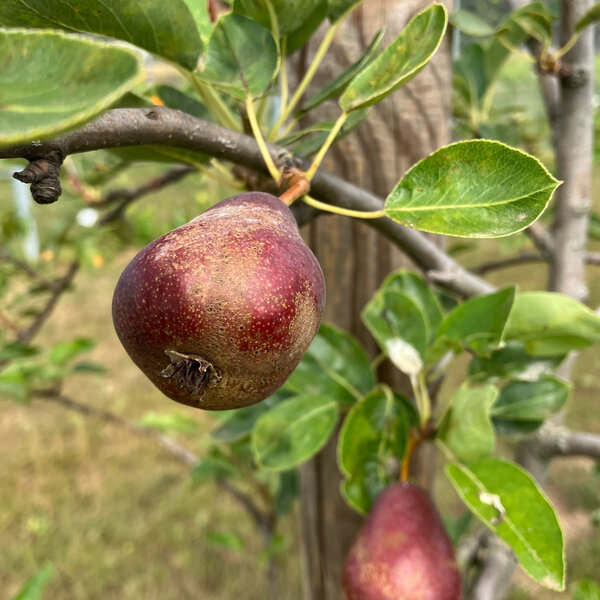
Pear trees (Pyrus spp.) play an important ecological role in fruit-growing ecosystems and semi-natural agricultural landscapes. During flowering, they provide a valuable source of nectar and pollen for pollinators, including wild bees, honey bees, bumblebees, and other insects. Mature pear trees with large crowns also provide habitat for birds, bats, saproxylic insects, fungi, and lichens. As long-lived woody plants, pear trees contribute to carbon sequestration, soil stabilization, and the regulation of local microclimates. Their fruits provide an important food resource for a wide range of wildlife and support terrestrial food webs. Traditional pear cultivars and traditional orchard systems, particularly meadow orchards, play a significant role in conserving genetic resources and promoting biodiversity. Their integration into sustainable agricultural systems enhances ecosystem services and contributes to the ecological sustainability of agricultural landscapes.
| Type | Pear |
| Variety | 'Gräfin Gepa' ‘Gräfin Gepa’ is one of the cultivars developed within the Saxonia breeding programme at Dresden-Pillnitz, Germany. The cultivar was introduced into commercial production in the early 2000s |
| Harvest period | Late September to early October; an autumn to late-autumn pear |
| Eating period | October to November; after harvest, Following harvest, the fruit undergoes a relatively short postharvest ripening period during which eating quality develops |
| Fruit | Large, predominantly pyriform to broadly pyriform in shape, with a smooth epidermis The flesh is creamy white, fine-textured, melting, and highly juicy, with a low proportion of stone cells |
| Color | Ground colour greenish-yellow, changing to yellow or golden-yellow at full maturity; The sun-exposed surface commonly develops an orange-red to reddish overcolour, which is an important characteristic of the cultivar |
| Flavour | Sweet, with a fine and balanced acidity and a pronounced, cultivar-specific aroma; at optimum eating maturity, the flesh is soft, melting, and highly juicy Sensory characteristics may vary with maturity stage, growing conditions, crop load, and harvest date |
| Uses | Primarily a dessert/table pear for fresh consumption. The fruit is also suitable for fruit salads, desserts, compotes, baking, and processing into juice and perry |
| Storage Life | The variety has limited to moderate storage life |
| Susceptibility | Pear scab (Venturia pyrina): relatively resistant to slightly susceptible Powdery mildew (Podosphaera leucotricha): relatively resistant Fire blight (Erwinia amylovora): moderately susceptible Pear psyllid (Cacopsylla pyri): no specific cultivar resistance is documented Pseudomonas (Pseudomonas syringae): some evidence suggests increased susceptibility under cool and humid spring conditions |
| Growth | Moderately vigorous to vigorous The tree develops a well-branched crown An open, well-lit canopy structure should be aimed for, particularly to promote fruit quality and reduce leaf and fruit moisture Early onset of fruit production; consistent and high yields Deciduous foliage White flowers; April to May |
| Site Requirements | Prefers sunny, warm, and well-ventilated locations with a sufficient growing season Deep, humus-rich, nutrient-rich, and well-drained soils with a consistent water supply are ideal Waterlogged conditions and heavily compacted soils should be avoided Adequate water supply during fruit development and ripening promotes fruit size and quality |
| Winter Hardiness | Generally sufficiently winter-hardy under Central European conditions However, because of its relatively early flowering, flowers and young fruitlets may be exposed to late-spring frost damage |
| Nutrient Requirements | Moderate; a balanced nutrient supply, adapted to the site and yield, should be aimed for Excessive nitrogen should be avoided, as it can lead to excessive vegetative growth, increase susceptibility to certain diseases, and adversely affect fruit quality Generalized foliar fertilization is not necessary and should only be used when nutrient requirements have been confirmed or are expected |
| Plant Protection | Due to its generally good resistance to scab and powdery mildew, ‘Gräfin Gepa’ can be classified as a comparatively robust pear variety Given its described resistance to scab and powdery mildew, the variety is generally well-suited for more extensive or organically oriented cultivation However, it is not completely resistant to disease Integrated pest management with regular monitoring for infestation and site-specific cultural practices is therefore recommended These include, in particular, appropriate site selection, an airy and well-lit canopy structure, proper training and maintenance pruning, and the removal of diseased plant parts and mummified fruit Plant protection measures should be tailored to the risk of infestation, forecast models or early warning services, and the applicable legal requirements. |
| Type | Pear |
| Variety | 'Williams Christ' The cultivar was discovered and subsequently propagated and popularized in Great Britain before 1770. It is one of the most widely grown and internationally important pear cultivars |
| Harvest period | Late August to mid-September, depending on location, weather conditions, tree age, rootstock, and yield Williams Christ’ is a classic summer to early-autumn pear For optimum fruit quality, the fruit is generally harvested before reaching full eating ripeness, as pears continue to ripen after harvest |
| Eating period | From late August or September, potentially extending into October under favorable post-harvest ripening and storage conditions Fruit should be harvested while still firm and allowed to undergo post-harvest ripening, during which the characteristic melting texture and aroma develop |
| Fruit | Medium-sized to large, occasionally very large; typically pyriform to pyriform-calyx-shaped, with a distinct waist and sometimes slightly irregular in outline The skin is smooth, thin, and relatively delicate The flesh is yellowish-white to creamy white, fine-textured, melt-in-the-mouth, and very juicy, with relatively few stone cells (sclereids) |
| Color | The ground color changes from green or greenish-yellow to yellow or golden-yellow as the fruit ripens A slight reddish to pinkish overcolor may develop on the sun-exposed side |
| Flavour | Highly aromatic; sweet with pleasant, balanced acidity and a melting, juicy texture The cultivar is characterized by a pronounced, muscat- or nutmeg-like aroma At optimal ripeness, the variety possesses high sensory fruit quality |
| Suitability | A high-quality dessert and processing cultivar. Suitable for fresh consumption, compotes, canning, baking, juice production, and perry Because of its intense and characteristic aroma, ‘Williams Christ’ is of particular importance for the production of pear eau-de-vie, commonly marketed as Williams pear brandy |
| Storage life | Limited to moderate. The variety is primarily intended for consumption shortly after harvest The actual storage life depends largely on the harvest date, fruit ripeness, temperature, and storage conditions |
| Susceptibility | Pear scab (Venturia pyrina): moderately susceptible to susceptible Powdery mildew (Podosphaera leucotricha): no reliable basis for pronounced variety-specific resistance Fire blight (Erwinia amylovora): relevant or increased susceptibility to fire blight Pear psylla (Cacopsylla pyri): no specific variety-specific resistance documented Pear rust (Gymnosporangium sabinae): low to moderate susceptibility |
| Growth | Moderately vigorous, with vigor potentially declining with tree age and varying according to rootstock and site conditions The young canopy is upright to broadly spreading, with moderate to good branching; lateral branches may become pendulous with age and crop load An open, well-lit canopy is desirable to promote fruit quality and facilitate canopy ventilation Early bearing; high and regular yields Deciduous foliage White flowers; generally mid-early; flowering time varies with climatic conditions |
| Site Requirements | Prefers sunny, warm, and well-ventilated sites with a sufficient growing season; ‘Williams Christ’ has relatively high heat requirements Deep, humus-rich, nutrient-rich, and well-drained soils with a consistent water supply are ideal Waterlogged conditions and heavily compacted soils should be avoided A consistent water supply during fruit development and ripening promotes fruit size and quality |
| Winter Hardiness | Generally sufficiently hardy under Central European conditions, but not particularly well-suited to unfavorable, harsh locations Wood and young shoots, in particular, can suffer frost damage under unfavorable winter conditions Due to the early flowering period, flowers and young fruit sets are sensitive to late frosts |
| Nutrient Requirements | Moderate to moderately high, depending on rootstock, soil fertility, tree age, and yield level; a balanced nutrient supply adapted to the site and yield should be aimed for Excessive nitrogen application should be avoided, as it can lead to excessive vegetative growth and negatively affect susceptibility to certain diseases and fruit quality |
| Plant Protection | ‘Williams Christ’ is not generally considered a disease-resistant pear variety. In particular, scab and fire blight can be significant issues Integrated pest management with regular monitoring for infestations and cultural practices adapted to the site is therefore recommended These include, in particular, appropriate site selection, an airy and well-lit canopy structure, proper training and maintenance pruning, and the removal of diseased plant parts and mummified fruit Plant protection measures should be based on the risk of infestation, forecast models or warning services, and the applicable legal requirements. |
| Type | Pear |
| Variety | ‘Conference’ A chance seedling selected in England in 1884. Today, ‘Conference’ is one of the economically most important pear cultivars in Europe |
| Harvest period | Mid- to late September The fruit should generally be harvested before reaching full eating ripeness, as pears continue to ripen after harvest ‘Conference’ is an autumn pear with good storage potential |
| Eating period | Late September to November under normal post-harvest ripening conditions; under suitable refrigerated or controlled-atmosphere storage, the marketing period can be extended considerably beyond this period The fruit is typically harvested while still firm and develops its characteristic melt-in-the-mouth texture and aroma during the ripening period |
| Fruit | Medium-sized to large; elongated-pyriform and characteristically slender, often with a pronounced neck and sometimes a slightly asymmetrical outline The skin is smooth to partially russeted and relatively firm. The flesh is creamy white to slightly salmon-coloured, fine-textured, melting, and very juicy, with a low proportion of stone cells (sclereids) |
| Color | Ground color green to greenish-yellow, becoming increasingly yellow as the fruit ripens A characteristic feature is extensive, cinnamon- to bronze-colored russeting, particularly around the calyx and on the sun-exposed side of the fruit |
| Flavour | Very juicy and melting; sweet with balanced, mild acidity. Aromatic, with subtle spicy and slightly nutmeg-like notes At optimum eating ripeness, ‘Conference’ exhibits high sensory fruit quality |
| Suitability | High-quality table and storage pear. Suitable for fresh consumption, fruit salads, compote, baked goods, and preserves, as well as for juice and cider production Because of its good storage potential, the cultivar is particularly important for extended and staggered marketing |
| Storage Life | Good to very good. ‘Conference’ is considered a good-storing pear cultivar and can be stored for several months under suitable refrigerated or controlled-atmosphere conditions |
| Susceptibility | Pear scab (Venturia pyrina): low to moderate susceptibility Powdery mildew (Podosphaera leucotricha): no reliable basis for pronounced variety-specific resistance Fire blight (Erwinia amylovora): no pronounced resistance to fire blight; infection is possible and may become significant under high infection pressure Pear psylla (Cacopsylla pyri): no specific variety-specific resistance documented Pear rust (Gymnosporangium sabinae): no sufficiently robust evidence to classify the cultivar as having low susceptibility |
| Growth | Moderately vigorous; growth and canopy development are substantially influenced by rootstock, site conditions, tree age, and crop load The young canopy is upright to broadly spreading and develops good branching; with increasing tree age, lateral branches may become more pendulous. An open, well-lit and well-ventilated canopy is desirable to promote fruit quality and a favourable canopy microclimate Early onset of bearing; regular and high yields Deciduous foliage White flowers; early to mid-season flowering, resulting in a corresponding risk of late-frost damage |
| Site Requirements | Prefers sunny, warm, and sheltered locations with a sufficient growing season. Good light exposure promotes fruit quality, color development, and uniform ripening Deep, humus-rich, nutrient-rich, and well-drained soils with a consistent water supply are favorable Waterlogged conditions and heavily compacted soils should be avoided A consistent water supply during fruit development and ripening promotes fruit size and quality |
| Winter Hardiness | Good winter hardiness under Central European conditions ‘Conference’ is generally suitable for cooler regions as well, although flowering and young fruit set may be threatened by late frosts |
| Nutrient Requirements | Moderate, depending on rootstock, soil fertility, tree age, and yield level; a balanced nutrient supply adapted to the site and yield should be aimed for Excessive nitrogen application should be avoided, as it can lead to excessive vegetative growth and negatively affect susceptibility to certain diseases and fruit quality |
| Plant protection | Overall, ‘Conference’ can be classified as a comparatively robust but not disease-resistant pear variety The variety is relatively less susceptible to scab in particular; however, infection with scab and fire blight is generally possible Integrated pest management with regular monitoring for infestations and site-specific cultural practices is therefore recommended These include, in particular, selecting a suitable site, maintaining an airy and well-lit canopy structure, performing proper training and maintenance pruning, and removing diseased plant parts and mummified fruit Plant protection measures should be based on the risk of infestation, forecast models or early warning services, and the applicable legal requirements. |
| Type | Pear |
| Variety | ‘Xenia’ The cross was made in Moldova in 1962 |
| Harvest period | Mid-October; depending on site and weather conditions, harvesting may take place somewhat later The cultivar has a relatively wide harvest window. Premature harvesting should be avoided |
| Eating period | October to February or beyond, depending on harvest date, storage conditions, and post-harvest ripening The fruit can be consumed while still relatively firm and develops a softer, more melting texture as ripening progresses |
| Fruit | Large to very large, generally rounded to broadly pear-shaped, with relatively firm skin The flesh is firm to melting, juicy to very juicy, and contains comparatively few stone cells (sclereids) |
| Color | Ground colour at harvest is green to greenish-yellow; as the fruit ripens, it becomes yellowish-green to yellow Moderate russeting or bronzing is characteristic of the cultivar, particularly around the calyx and stem cavity |
| Flavour | Juicy to very juicy, sweet, with balanced acidity and a characteristic, relatively mild aroma The sensory profile is described as fresh and slightly aromatic |
| Suitability | High-quality dessert and storage pear; particularly suitable for fresh consumption as well as for fruit salads, desserts, compote, and other fruit preparations Also suitable for juice production ‘Xenia’ is of particular importance for extending the marketing season |
| Storage Life | Very good to excellent storage pear; when stored in a cold storage facility at approximately −0.5 °C, the fruit’s firmness can be maintained until March or April Under suitable controlled-atmosphere (CA) storage conditions, storage periods lasting until the end of May have been reported |
| Susceptibility | Pear scab (Venturia pyrina): very low to moderate susceptibility; overall, comparatively low susceptibility to scab Powdery mildew (Podosphaera leucotricha): no reliable evidence of pronounced cultivar-specific resistance Fire blight (Erwinia amylovora): no pronounced resistance; however, trials to date have not indicated particularly high susceptibility, and the cultivar has sometimes been classified as comparatively robust Fruit tree canker (Neonectria galligena): very low susceptibility Pear rust (Gymnosporangium sabinae): insufficient evidence for a reliable cultivar-specific susceptibility rating Pear psylla (Cacopsylla pyri): no specific resistance documented |
| Growth | Moderately vigorous; well-branched trees with a growth habit ranging from horizontal to upright The cultivar tends to fruit heavily on one-year-old wood; sufficient young fruiting wood should therefore be retained during maintenance pruning Excessive removal of young wood in favour of older wood may adversely affect yield Early onset of fruiting; early and high yields combined with a low tendency toward alternate bearing Deciduous foliage White flowers; early flowering, approximately 3–5 days before ‘Conference’ under the conditions reported in cultivar trials |
| Site Requirements | Prefers warm, sunny, and well-lit sites Deep, humus-rich, nutrient-rich, and well-drained soils with a consistent water supply are favorable Waterlogged conditions and heavily compacted soils should be avoided A consistent water supply during fruit development and ripening promotes fruit size and quality |
| Winter Hardiness | Good winter hardiness under Central European conditions However, early flowering increases the risk to flowers and young fruit set from late frosts |
| Nutrient Requirements | Moderate; nutrient supply should be adjusted according to soil fertility, rootstock, tree age, and yield level Excessive nitrogen application should be avoided, as it can promote excessive vegetative growth and thereby adversely affect fruit quality, canopy structure, and susceptibility to disease |
| Plant Protection | ‘Xenia’ can generally be classified as a comparatively robust but not disease-resistant pear variety Particularly favorable traits include its comparatively low susceptibility to scab and its low susceptibility to fruit tree canker. Regarding fire blight, trials to date have not shown any pronounced susceptibility Integrated pest management with regular monitoring for infestations and site-specific cultural practices is therefore recommended This includes, in particular, selecting a suitable site, maintaining an airy and well-lit canopy structure, performing proper training and maintenance pruning, and removing diseased plant parts and mummified fruit Plant protection measures should be based on the risk of infestation, forecast models or warning services, and the applicable legal requirements. |
Quince trees (Cydonia oblonga Mill.) are ecologically important as long-lived woody plants in agricultural landscapes and semi-natural habitats. Their flowers provide a valuable source of nectar and pollen for a wide range of pollinators, including honey bees, wild bees, bumblebees, and other insects, thereby supporting local biodiversity. As perennial woody plants, quince trees contribute to carbon sequestration, soil conservation, and the regulation of local microclimates. Their fruits provide a food resource for a variety of wildlife species and support terrestrial food webs. Mature quince trees may also provide habitat for saproxylic organisms, birds, and small mammals. The conservation of traditional quince cultivars contributes to the preservation of genetic resources and cultivated plant diversity. Through their integration into meadow orchards, home gardens, and sustainable agricultural systems, quince trees contribute to the provision of ecosystem services and the ecological sustainability of agricultural landscapes.
| Type | Quince |
| Variety | 'Konstantinopler Apfelquitte' Historic apple quince cultivar; exact origin uncertain, but generally believed to have originated in the eastern Mediterranean region, particularly present-day Türkiye. |
| Harvest maturity | Early to mid-October |
| Optimal ripeness | October to December (after a short period of postharvest ripening) |
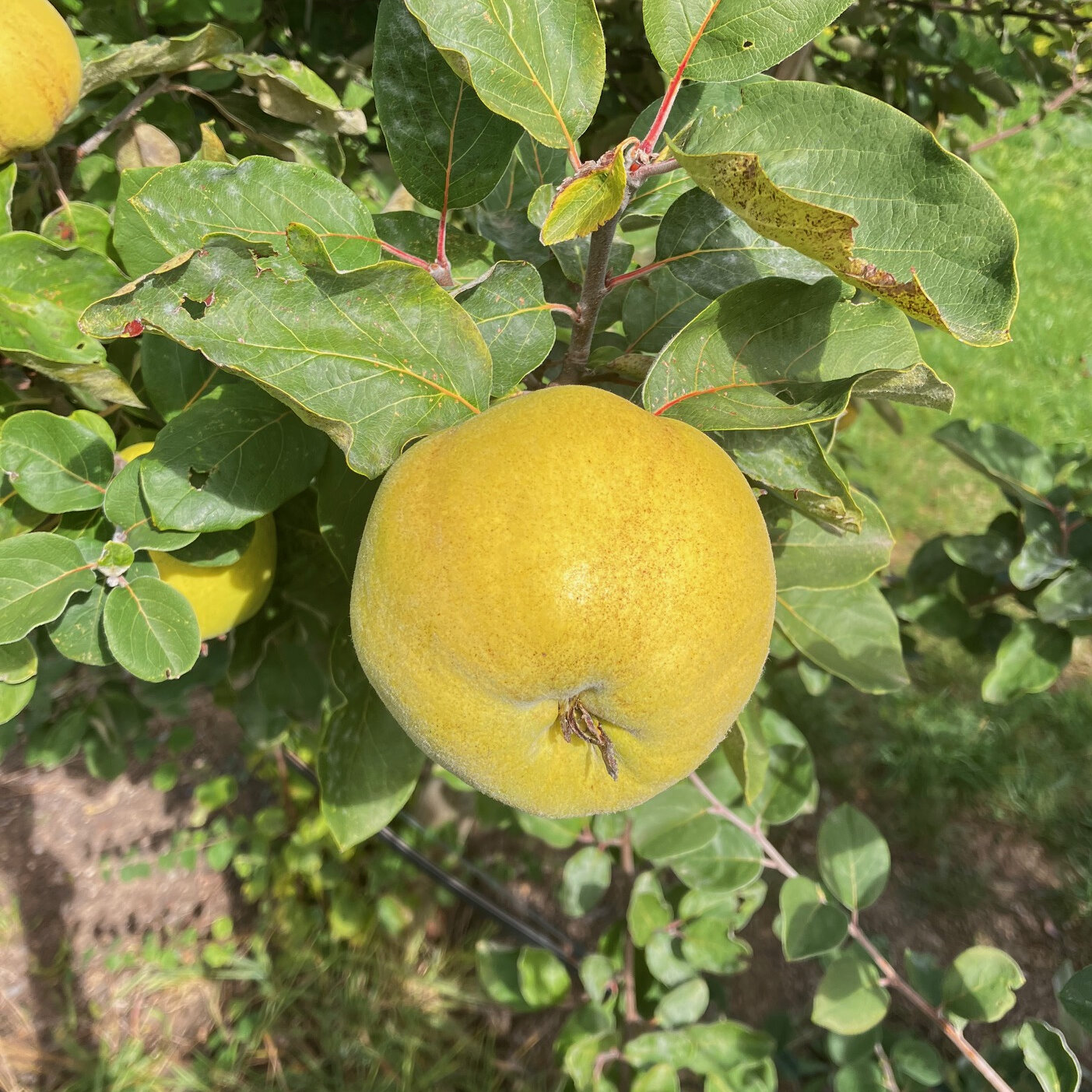
| Fruit | Medium to large; apple-shaped to nearly round; densely covered with fine tomentose hairs, becoming almost glabrous at maturity; firm, creamy-white to yellowish-white, fine-textured flesh; highly aromatic |
| Skin Color | Ground color: greenish-yellow, turning bright golden yellow at full maturity |
| Flavor | Astringent and tart when raw; after cooking or processing, pleasantly sweet-tart with an intense, characteristic quince aroma |
| Uses | Jelly; jam; compote; quince paste (quince cheese); juice; syrup; liqueurs; distilled spirits; excellent for cooking and baking |
| Susceptibility | Fire blight (Erwinia amylovora): low to moderate susceptibility Quince leaf blight (Diplocarpon mespili): low to moderate susceptibility Brown rot (Monilinia fructigena): low to moderate susceptibility No known specific genetic resistance |
| Growth | Moderate growth Upright to broadly spreading, well-branched canopy Early fruiting; high and regular yields Medium-green, deciduous foliage Large white to pale pink flowers; April to May |
Site requirements Hardiness | Full sun to partial shade; prefers warm, sheltered locations; deep, humus-rich, nutrient-rich, well-drained soils with consistent moisture availability; deep-rooted; sensitive to waterlogging Winter hardy; suitable for most Central European growing regions; flowers are moderately susceptible to late spring frosts. |