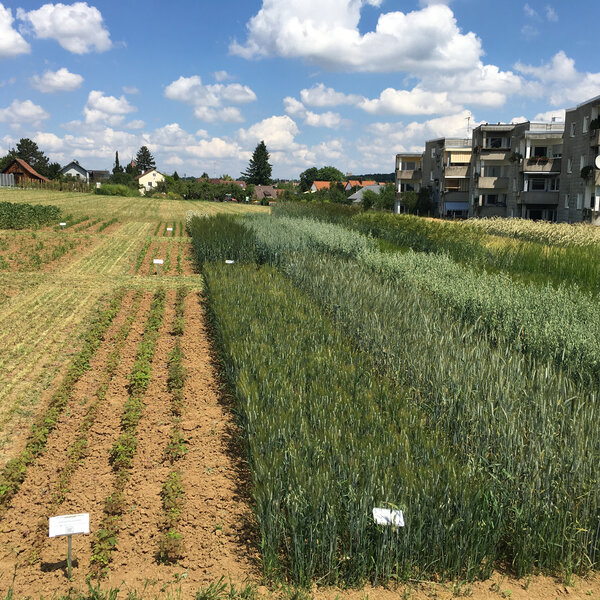
Morphological characteristics of Emmer:
Scientific Note:
Emmer (Triticum dicoccum) belongs to the hulled wheats
A characteristic feature is the strong attachment of the caryopsis to the surrounding hulls, so that the grains do not separate completely from them during threshing
The combination of spike structure, glume characteristics, awns, and leaf characteristics allows for morphological characterization
Growth habit:
Annual, tuft-forming grass with an erect, usually hollow culm
The culm is divided into several nodes and internodes and may produce several culms through tillering
Leaves:
Leaves are alternate and arranged in two rows (distichous). The leaf blades are flat, linear to lanceolate, and parallel-veined. The leaf sheaths enclose the culm
Auricles:
Short, sickle-shaped, and partially clasping the culm. The auricles are distinctly ciliate
Important field characteristic: short, distinctly ciliate auricles
Ligule:
Membranous and relatively short, usually about 1–4 mm long. The upper margin is predominantly truncate and may be smooth to finely toothed
Spike:
Terminal, erect, elongated, and two-ranked. The spikelets are borne individually at the nodes of the rachis and contain several florets
The spike is relatively compact and possesses a robust, clearly developed rachis
At maturity, the rachis breaks into individual segments, while the spikelets remain firmly enclosed by the glumes
Awns:
The spike is typically awned
The awns may reach several centimetres in length and arise from the lemmas
Their length and development may vary depending on the cultivar and genotype
Grain (caryopsis):
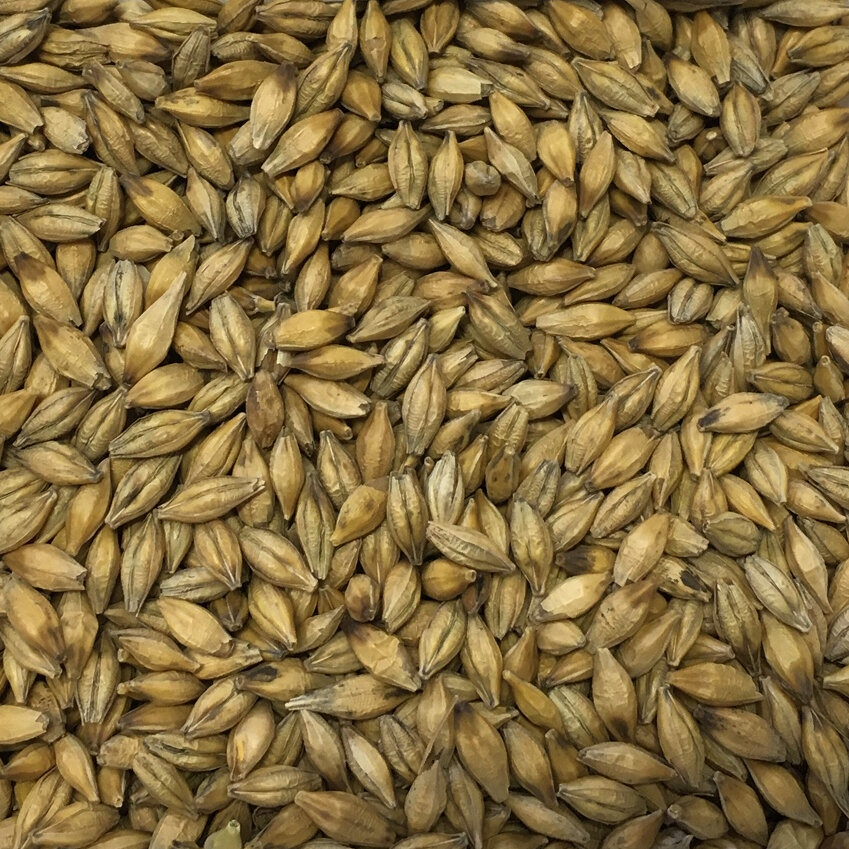
The caryopsis is oval to ellipsoidal, with a distinct longitudinal or ventral crease and a tuft of hairs at the distal end
In emmer, the caryopsis remains firmly enclosed by the lemma and palea after maturity
The grains may vary in colour from yellowish and yellowish-brown to reddish, depending on the genotype