| Type | Grapevine |
| Variety | ‘Weißburgunder’, internationally known as ‘Pinot Blanc’
A light-colored mutation within the Pinot group. ‘Weißburgunder’ (‘Pinot Blanc’) is considered to have originated as a natural mutation of ‘Grauburgunder’ (‘Pinot Gris’) and is therefore closely related to ‘Spätburgunder’ (‘Pinot Noir’) The variety is historically associated with the Burgundy region, although its precise geographical origin and date of emergence cannot be established with certainty from historical records White wine grape |
| Ripening period | Mid-late to late; depending on site and weather conditions, ripening generally occurs from September to early October
Warm, sunny sites are favorable for achieving adequate physiological ripeness |
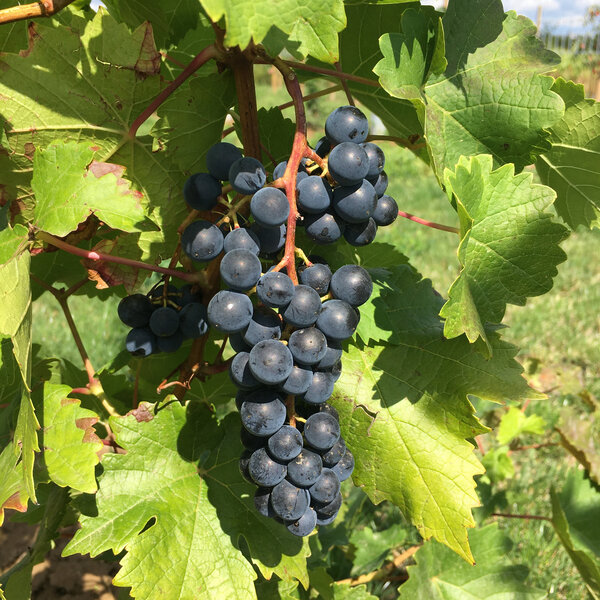
| Grapes | Medium-sized, cylindrical to conical, often shouldered, and usually compact with tightly packed berries
The dense cluster structure can impair airflow within the cluster and increase the risk of Botrytis and other forms of bunch rot, particularly under humid conditions |
| Berries | Small to medium-sized, roundish to slightly oval, greenish-yellow to yellow-green
The berries have a relatively thin to medium-thick skin and are juicy |
| Flavor | The wines generally have a relatively delicate and subtle aromatic profile, with notes of apple, pear, citrus, and occasionally floral, nutty, or mineral nuances
The variety typically produces wines with moderate, well-integrated acidity, generally somewhat lower than that of Riesling
Depending on ripeness and vinification, the wines may range from fresh and light-bodied to fuller-bodied, more structured styles |
| Must | Under suitable site and yield conditions, good to high must weights can be achieved
Appropriate yield management can help improve must weight, extract content, aromatic intensity, and wine quality |
| Suitability | Primarily for the production of high-quality, dry, and structured white wines
Depending on the degree of ripeness and aging, ‘Weißburgunder’ is also suitable for fresh, light-bodied wines as well as for fuller-bodied wines
Due to its balanced acidity and relatively neutral to subtly fruity aroma profile, the variety is also suitable for the production of sparkling wines
Under suitable climatic conditions, high-quality Prädikat wines can also be produced |
| Susceptibility | Downy mildew (Plasmopara viticola): no specific genetic resistance to the fungus; infection possible under favorable conditions
Powdery mildew (Erysiphe necator): no specific genetic resistance to the fungus; infection possible under favorable conditions
Botrytis (Botrytis cinerea): moderate to high susceptibility, particularly due to the frequently compact cluster structure. Good airflow in the fruit zone and appropriate canopy management can reduce the risk of bunch rot |
| Growth | Moderate to vigorous, predominantly upright to semi-upright growth
Budbreak occurs at a medium to medium-early stage
Appropriate yield regulation and canopy management are advisable to maintain cluster quality and achieve adequate ripeness |
| Site | Moderate to high demands in terms of site and microclimate. Warm, sunny, and well-ventilated sites are preferred
Deep, well-drained soils with adequate water and nutrient availability are favorable
Waterlogged soils should be avoided. Very light and drought-prone soils may be problematic under prolonged water stress |
| Winter Hardiness | Moderate to good; The variety is generally considered relatively tolerant of winter frost
However, its medium to medium-early budbreak may result in a moderate risk of late-frost damage depending on site and local climatic conditions |
| Nutrient Requirements | Moderate requirements; a balanced nutrient supply should be maintained; excessive nitrogen should be avoided, especially during periods of vigorous growth |
| Plant Protection | Plant protection should be adapted to site conditions, weather patterns, and disease pressure. Particular attention should be paid to downy mildew, powdery mildew, and Botrytis cinerea
Due to the lack of genetically determined fungal resistance, the variety does not offer the reduced fungicide requirements characteristic of PIWI varieties |
Example of
Cultivation Management (2022) | May 27, 2022: Entec (15/5/20) 100 N kg/ha, 33 kg P/ha, 132 kg K/ha June 3, 2022: Delan WG (downy mildew) 0.6 kg/ha, wettable sulfur (powdery mildew) 3.6 kg/ha
June 23, 2022: Melody combi (downy mildew) 0.9 kg/ha, wettable sulfur (powdery mildew) 3.6 kg/ha
August 3, 2022: Mildicut (downy mildew) 4 l/ha, Topas (powdery mildew) 0.32 l/ha |