Arable crops

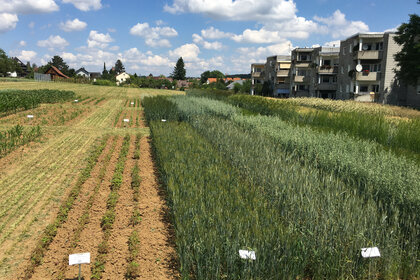
Arable crops represent a variety of useful plants that are cultivated on agricultural land. This diversity of fruits is presented in the Educational garden agricultural sciences and crop production.

[Übersetzen nach: English]

Arable crops are plants that are cultivated on agricultural land in a sequence of time known as crop rotation. Arable crops are replanted annually, with the exception of fodder crops, which are grown for two to three years in crop rotation in order to loosen the soil. Diverse crop rotation serves to maintain soil fertility, reduce weed pressure and reduce disease and pest infestation. Crops grown in fields include cereals and pseudocereals, which are rich in carbohydrates, as well as oilseeds, legumes (rich in protein), root crops (root and tuber crops), fodder crops (field fodder) and vegetables. They are used for food production, animal feed and industrial use.
Carbohydrate-rich grains

Wheat and barley were already being cultivated in Mesopotamia 10,000 years ago. From there, they began their triumphal march across all temperate climate zones of the world. Oats and rye are secondary crops. They were initially "weeds" in cereals and […]

Oil rich grains

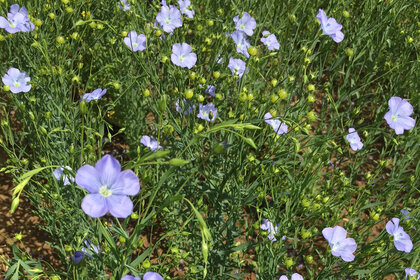
Rapeseed, sunflower, linseed, camelina and safflower are available for the production of vegetable oils. Rapeseed plays a major role as a domestic oil plant. The press residues from oil production are used as animal feed. The oils are used in the […]

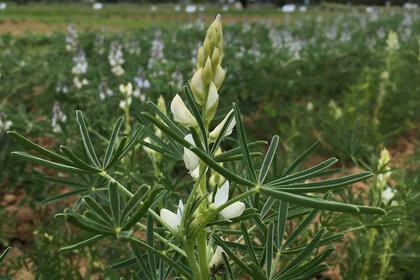
Protein rich grains

Our native legumes are mainly grown for animal feed as protein feed. For people around the world, they are an important source of vegetable protein and amino acids and are becoming increasingly important. Legumes have the special feature that their […]

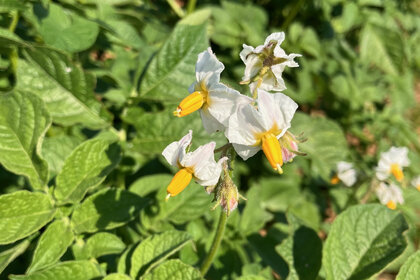
Foto: Nahaufnahme von weißen Kartoffelblüten mit gelben Staubblättern, umgeben von grünen Blättern. Die Pflanzen sind dicht gewachsen und füllen den Hintergrund.

Root- and tuber crops

The root and tuber crops are harvested underground. This makes harvesting the crops very time-consuming. The potato, still a staple food, originally comes from South America and arrived in Europe in the 16th century. By selecting the Silesian white […]

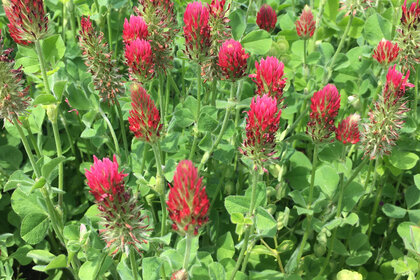
Forage crops

Forage plants mainly include grasses and a variety of legumes as well as some cruciferous plants. Forage plant stands enable the temporary establishment of a grassland-like stand. They thus increase soil fertility and at the same time provide […]

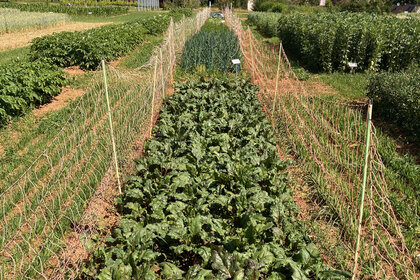
Vegetable

The "Agricultural Sciences" educational garden shows a small, selected range of field vegetables that are grown on arable land. Vegetables are predominantly herbaceous plants whose edible parts can be of different types. A distinction is made between […]