
Stone fruit
Unlike pome fruit, stone fruit has only a single, hard pit surrounded by non-woody flesh. The stone is also the seed. Stone fruits include, among others, plums, mirabelle plums, sweet and sour cherries, peaches, apricots, and nectarines.
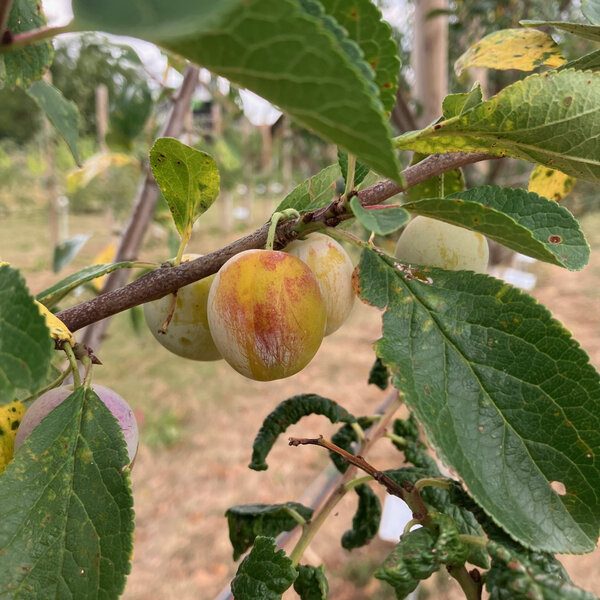
Unlike pome fruit, stone fruit has only a single, hard pit surrounded by non-woody flesh. The stone is also the seed. Stone fruits include, among others, plums, mirabelle plums, sweet and sour cherries, peaches, apricots, and nectarines.
| Type | Cherry |
| Brand/Variety | AdeliseR Masdel |
| Harvesting period | Early, starting in the 3rd cherry week (early June – mid-June) |
| Ready to eat | from harvest |
| Fruit | Large to very large, kidney-shaped, medium-length stem, very juicy when fully ripe Flesh: creamy white to pinkish-red, firm |
| Color | dark red to blackish red, distinctly marbled |
| Flavor | spicy aroma |
| Suitability | well-suited as a storage fruit |
| Susceptibility | Low to moderate Susceptibility to cracking |
| Growth | Moderately vigorous, spreading—slightly pendulous, very well-branched, with horizontal branch angles dark green foliage Early, long-lasting bloom |
| Requirements | Sunny, well-ventilated location, light soil |
| Type | Cherry (Crunchy Cherry) |
| Variety | Kordia |
| Harvesting period | From the 6th cherry week (mid-July–late July), high yield |
| Optimal ripeness | from harvest |
| Fruit | Large–very large, heart-shaped, very long stem, very juicy when fully ripe, firm flesh |
| Color | shiny, dark red to violet-black |
| Flavor | spicy aroma, sweet with a pleasant tartness |
| Uses | Fresh consumption, preservation |
| Susceptibility | High resistance to being knocked over, rain-resistant |
| Growth | Vigorous growth, broad, spreading crown dark green foliage, yellow fall color, deciduous mid-late flowering (April–May), somewhat susceptible to late frost |
| Requirements | Sunny, well-ventilated location; no special soil requirements; deep-rooted |
| Type | Cherry |
| Variety | Grace Star |
| Harvesting period | Starting in the 3rd cherry week (early June–mid-June) |
| Ready to eat | Upon harvest |
| Fruit | Large, heart-shaped, long stem, juicy when fully ripe Flesh: medium-firm |
| Color | medium to dark red, glossy |
| Flavor | Moderately aromatic |
| Uses | Fresh consumption, preservation |
| Susceptibility | High resistance to bruising, rain-resistant |
| Growth | moderate to slow growth, moderately branched dark green foliage, deciduous Medium-early to medium flowering |
| Requirements | Sunny, well-ventilated location; no special soil requirements; deep-rooted |
| Type | Cherry (Crunchy Cherry) |
| Variety | Regina |
| Harvesting period | Starting in the 7th cherry week (early August–mid-August), high yield |
| Ready to eat | from harvest |
| Fruit | Very large, heart-shaped, firm flesh |
| Color | dark red to black |
| Flavor | aromatic, sweet, and with a subtle acidity |
| Uses | Stores well, best eaten fresh, suitable for canning |
| Susceptibility | High resistance to bruising |
| Growth | Vigorous, compact, hardy Green foliage, yellow fall color, deciduous Late flowering (April–May), making it relatively resistant to late frosts |
| Requirements | Sunny, well-ventilated location; no special soil requirements; deep-rooted |
| Type | Cherry |
| Variety | Stardust |
| Harvesting period | Weeks 6–7 of the cherry season (mid-July–mid-August), high yield |
| Ready to eat | From harvest |
| Fruit | Very large, flattened spherical-heart-shaped, light yellow, firm, juicy flesh Moderately high resistance to bruising |
| Color | two-toned, base color yellow/overcolor red |
| Flavor | spicy and aromatic, sweet |
| Uses | Fresh consumption, canning, juice |
| Susceptibility | High resistance to bruising |
| Growth | Upright, well-branched, hardy medium-green foliage, yellow fall color, deciduous Late flowering (April–May), therefore not very susceptible to late frost |
| Requirements | Sunny, well-ventilated location; no special soil requirements; deep-rooted |
| Type | Sour cherry |
| Variety | Shadow Morello |
| Harvesting period | Starting in the 6th cherry week (late July–mid-August), high yield |
| Ready to eat | |
| Fruit | dark red, medium-firm flesh, very juicy |
| Color | Brown to black-red |
| Flavor | aromatic, high acidity |
| Uses | Juice, canning |
| Susceptibility | Monilia, regular pruning |
| Growth | Weak to moderate, thin, densely branched shoots; tendency to become bare, hence regular pruning green foliage, deciduous Late flowering (April–May), frost-sensitive |
| Requirements | Partial shade, no special soil requirements, deep-rooted |
| Type | Plum |
| Variety | Hanita |
| Harvesting period | mid-late, August–mid-September |
| Ready to eat | from harvest |
| Fruit | Medium-sized, juicy, stone detaches easily Moderately firm, yellow-green flesh |
| Color | dark blue, heavy bloom |
| Flavor | Sweet |
| Uses | Table fruit, canning, distilling |
| Susceptibility | |
| Growth | moderate to vigorous, bushy green foliage, deciduous mid-early flowering, relatively late frost-hardy |
| Requirements | Sun to partial shade, well-drained, nutrient-rich soil, deep-rooted |
| Type | Plum |
| Variety | Home-grown plums |
| Harvesting period | Early September – Mid-October |
| Ready for eat | from harvest |
| Fruit | Small to medium-sized, juicy, stone detaches easily firm, golden-yellow flesh |
| Color | dark violet-blue |
| Flavor | spicy aroma, slightly tart |
| Uses | Eaten fresh, canning, schnapps |
| Susceptibility | Scab disease |
| Growth | moderate, bushy green foliage, deciduous Blooms in April |
| Requirements | Sun to partial shade, well-drained soil, shallow-rooted |
| Type | Plum |
| Variety | Topfive |
| Harvesting period | mid-late, mid-August |
| Ready to eat | from harvest |
| Fruit | medium-sized, juicy, firm, medium-yellow flesh |
| Color | dark blue, heavy bloom |
| Flavor | aromatic, sweet-tart, delicately spicy |
| Uses | Eaten fresh, baking, jam, puree |
| Susceptibility | Tolerant to scab, low susceptibility to Monilia, low susceptibility to rust |
| Growth | Upright, compact, and well-branched green foliage, deciduous medium-late flowering (April–May), relatively late frost-hardy |
| Requirements | Sun to partial shade, well-drained, nutrient-rich soil, deep-rooted |
| Type | Mirabelle |
| Variety | Nancy |
| Harvesting period | mid-late, from mid-August |
| Ready to eat | from harvest |
| Fruit | Small and round, moderately juicy, yellow, firm flesh, stone detaches easily |
| Color | golden yellow, speckled with dark red |
| Flavor | aromatic, sweet, spicy |
| Uses | Eaten fresh, canning, distilling |
| Susceptibility | |
| Growth | moderate green foliage, deciduous mid-late flowering (April), |
| Requirements | Sun to partial shade, well-drained, nutrient-rich soil, deep-rooted |
| Type | Reneklode |
| Variety | Oullis |
| Harvesting period | mid-early, from mid-August |
| Ready to eat | from harvest |
| Fruit | large, juicy Light green-yellow, medium-firm flesh |
| Color | Yellow with a reddish overcolor |
| Flavor | aromatic, sweet |
| Uses | Eaten fresh, for canning |
| Susceptibility | |
| Growth | vigorous, bushy green foliage, deciduous Flowering: March–April, |
| Requirements | Sun to partial shade, well-drained, nutrient-rich soil, deep-rooted |
| Type | Apricot |
| Variety | Orange-red |
| Harvesting period | Early, starting in July |
| Ready to eat | from harvest |
| Fruit | medium-sized, oval, juicy, firm, stone detaches easily Orange flesh |
| Color | orange, with a reddish tinge on the sun-exposed side |
| Taste | sweet, with a subtle tartness |
| Uses | Eaten fresh, canning, baking |
| Susceptibility | Low susceptibility to sharka and Monilia, winter-hardy |
| Growth | Vigorous, strong, semi-upright, branched green foliage, deciduous Early flowering, light pink in March–April |
| Requirements | Sun, sheltered from the wind, well-drained, nutrient-rich soil, deep-rooted |